" height="32.00002387147419px" id="gZXGZYql_" transform="translate(0 0)" width="33.17407881260548px"/><path d="M 2.085 0 C 2.398 0.09 2.616 0.346 2.862 0.551 C 4.463 1.882 5.328 4.198 4.692 6.221 C 4.23 7.692 2.854 8.429 1.559 9.077 C 0.984 9.294 0.604 9.374 0 9.506 C 1.261 7.006 2.053 5.972 0.077 3.616 C 0.93 2.522 1.608 1.302 2.085 0 Z" fill="rgb(255, 255, 255)" height="9.505700000000001px" id="cmY0ROQXE" transform="translate(26.962 11.764)" width="4.902088461320112px"/><path d="M 2.786 0.079 C 4.516 -0.195 6.882 0.235 8.153 1.529 C 9.314 2.711 9.449 4.074 9.45 5.641 L 8.055 4.448 C 7.13 3.7 6.366 3.236 5.22 2.863 C 2.88 2.103 1.689 2.46 0 0.491 C 0.949 0.332 1.831 0.191 2.786 0.079 Z" fill="rgb(255, 255, 255)" height="5.640822256039236px" id="QF25qHlEr" transform="translate(19.227 1.379)" width="9.450099999999999px"/><path d="M 5.655 0 C 5.917 0.113 5.862 0.633 5.911 1.004 C 6.04 2.045 6.387 3.046 6.929 3.943 C 5.131 4.63 3.592 5.19 1.733 4.47 C 0.726 3.926 0.319 3.27 0 2.213 C 2.759 1.595 3.154 1.371 5.655 0 Z" fill="rgb(255, 255, 255)" height="4.806175899027007px" id="kqgl_H_Bc" transform="translate(10.595 23.332)" width="6.928799999999999px"/><path d="M 0 0 C 0.65 0.017 1.138 0.041 1.491 0.654 C 3.245 3.701 4.719 4.269 8.278 3.546 C 7.879 3.861 7.49 4.137 7.076 4.431 C 6.222 4.957 5.254 5.271 4.254 5.345 C 1.023 5.561 0.155 2.656 0 0 Z" fill="rgb(255, 255, 255)" height="5.356585200702476px" id="A5o1AXt5e" transform="translate(7.901 25.553)" width="8.277719999999999px"/><path d="M 1.582 0 C 1.889 0.239 1.638 0.793 1.582 1.267 C 1.337 3.362 1.705 4.763 2.654 6.583 C 2.182 7.09 1.586 7.662 1.092 8.161 L 0.98 8.239 L 0.826 8.184 C -0.289 5.719 -0.489 2.026 1.582 0 Z" fill="rgb(255, 255, 255)" height="8.23884px" id="K4X1nlNhw" transform="translate(1.373 8.977)" width="2.6544824443243806px"/><path d="M 4.879 0 L 5.154 0.02 C 5.173 0.055 5.191 0.089 5.21 0.124 C 4.076 1.11 3.076 1.841 2.163 3.07 C 0.899 4.77 1.042 6.073 0.594 7.936 C -0.71 7.351 0.477 3.227 0.911 2.183 C 1.385 1.046 3.753 0.398 4.879 0 Z" fill="rgb(255, 255, 255)" height="7.93632px" id="iX1WuEJsS" transform="translate(4.258 5.422)" width="5.209503656189256px"/><path d="M 0.891 0 C 1.252 0.397 0.785 0.972 2.043 1.993 C 3.579 2.288 5.164 2.203 6.66 1.745 C 6.19 2.232 5.777 2.59 5.268 3.03 C 5.209 3.074 5.149 3.118 5.09 3.162 C 3.442 4.368 1.179 3.903 0 2.267 C 0.206 1.503 0.429 0.651 0.891 0 Z" fill="rgb(255, 255, 255)" height="3.840138803869854px" id="EYhSkzb98" transform="translate(10.639 14.254)" width="6.660399999999999px"/><path d="M 5.7 0 L 5.862 0.129 C 5.871 0.163 5.899 0.278 5.896 0.313 C 5.7 2.553 3.858 4.223 1.838 4.943 C 1.312 5.131 0.79 5.181 0.227 5.231 C 0.062 5.156 0.114 5.18 0 5.006 C 0.058 4.568 2.368 2.938 2.85 2.535 C 3.828 1.716 4.745 0.832 5.7 0 Z" fill="rgb(255, 255, 255)" height="5.230699999999999px" id="rR3aItzbE" transform="translate(20.021 22.535)" width="5.895938333146585px"/><path d="M 1.798 0.061 C 2.392 -0.019 3.597 -0.071 4.125 0.244 C 4.638 0.944 4.484 2.507 3.821 3.106 C 3.426 3.233 3.583 3.227 3.161 3.071 C 2.323 2.592 0.895 1.713 0 1.493 C 0.65 0.799 0.954 0.488 1.798 0.061 Z" fill="rgb(255, 255, 255)" height="3.1951027036145305px" id="IMle10bWj" transform="translate(15.146 10.535)" width="4.430712176398055px"/><path d="M 0.018 0 C 0.282 0.063 1.864 1.126 2.331 1.364 C 3.197 1.804 3.346 1.876 4.34 2.173 C 4.251 2.864 4.215 3.588 4.169 4.285 C 3.236 4.526 0.886 2.837 0.45 1.956 C 0.031 1.109 -0.041 0.914 0.018 0 Z" fill="rgb(255, 255, 255)" height="4.308168324411934px" id="pheoyshQj" transform="translate(2.312 19.986)" width="4.339817240842605px"/><path d="M 0 0.027 C 0.439 0.014 1.2 -0.035 1.608 0.043 C 3.315 0.369 2.426 2.559 2.106 3.651 C 2.035 3.895 2.003 4.098 1.809 4.257 C 0.598 4.238 0.09 0.995 0 0.027 Z" fill="rgb(255, 255, 255)" height="4.257278283966036px" id="y4SOtrApl" transform="translate(22.564 5.982)" width="2.6241732006357594px"/><path d="M 2.53 0 C 3.199 0.233 4.697 4.443 1.642 3.339 C 0.801 2.889 0.575 2.665 0 1.9 C 0.709 1.252 1.74 0.538 2.53 0 Z" fill="rgb(255, 255, 255)" height="3.5230979695442386px" id="taMdD9ETv" transform="translate(22.166 17.775)" width="3.4914692646924834px"/><path d="M 1.922 0 L 2.08 0.004 C 2.445 0.65 1.939 4.817 0.934 5.155 L 0.716 5.046 C -0.285 2.784 -0.525 1.194 1.922 0 Z" fill="rgb(255, 255, 255)" height="5.154800000000002px" id="udg1KI2m_" transform="translate(17.619 21)" width="2.1985109419737654px"/><path d="M 0.58 0 C 0.964 0.148 2.564 1.331 3.056 1.648 L 1.563 3.194 C 0.988 3.708 0.635 3.938 0 4.353 C 0.455 2.537 0.619 1.856 0.58 0 Z" fill="rgb(255, 255, 255)" height="4.353200000000001px" id="hiTtHQeFA" transform="translate(20.577 20.867)" width="3.055799999999998px"/><path d="M 0.966 0 C 1.582 0.047 3.874 0.689 3.937 1.412 C 3.75 1.663 3.405 1.698 3.09 1.773 C 2.282 1.958 0.27 2.516 0 1.461 C 0.092 0.94 0.569 0.343 0.966 0 Z" fill="rgb(255, 255, 255)" height="2.0860744736189787px" id="opNh2nfUr" transform="translate(13.15 13.09)" width="3.9368px"/><path d="M 3.076 0 L 3.294 0.079 L 3.342 0.207 C 2.908 1.051 2.415 1.797 1.984 2.692 C 1.434 3.834 1.003 5.282 0.264 6.258 C 0.071 6.168 0.14 6.22 0.007 6.032 C -0.126 4.485 1.706 0.885 3.076 0 Z" fill="rgb(255, 255, 255)" height="6.258489999999999px" id="EXvZ1NrdY" transform="translate(5.901 7.504)" width="3.3417542024784233px"/><path d="M 1.308 0 C 1.265 -0.04 2.536 3.529 2.776 4.008 C 2.361 3.821 2.001 3.628 1.6 3.413 C -0.431 2.074 -0.528 1.77 1.308 0 Z" fill="rgb(255, 255, 255)" height="4.007940350226239px" id="p5Vi1bLFm" transform="translate(3.356 16.691)" width="2.7756652348500186px"/><path d="M 0.588 0 C 0.712 0.037 0.813 0.085 0.929 0.142 C 1.465 0.403 1.872 0.872 2.054 1.44 C 2.263 2.103 2.018 2.498 1.384 2.679 L 0 3.028 C 0.272 2.132 0.442 0.93 0.588 0 Z" fill="rgb(255, 255, 255)" height="3.0282500000000008px" id="V_zCzpfyC" transform="translate(25.759 6.998)" width="2.126652647905342px"/><path d="M 2.102 0 C 2.802 0.107 3.532 0.768 4.104 1.212 C 2.902 1.364 2.267 1.509 1.163 2.011 C 0.824 2.209 0.36 2.545 0 2.48 C 0.031 1.997 1.687 0.41 2.102 0 Z" fill="rgb(255, 255, 255)" height="2.4884510228622325px" id="KgZLUphip" transform="translate(11.2 5.676)" width="4.1045px"/><path d="M 4.112 0.034 C 4.292 -0.019 4.317 -0.009 4.495 0.055 L 4.521 0.223 C 4.183 0.728 0.99 2.723 0.316 3.048 C 0.138 3.125 0.208 3.106 0 3.08 C 0.021 1.932 3.087 0.317 4.112 0.034 Z" fill="rgb(255, 255, 255)" height="3.1028650031226688px" id="qq3hk8yZK" transform="translate(10.785 7.828)" width="4.521000000000001px"/><path d="M 0.141 0.077 C 0.594 0.026 1.199 -0.069 1.623 0.081 C 2.341 0.337 3.29 0.695 3.403 1.535 L 3.219 1.757 C 2.961 1.841 2.676 1.923 2.409 1.857 C 1.834 1.715 0.306 0.711 0 0.221 Z" fill="rgb(255, 255, 255)" height="1.8810147921990854px" id="JXpIE1opf" transform="translate(15.32 4.703)" width="3.402700000000001px"/><path d="M 2.72 0.04 C 3.046 -0.001 3.15 -0.015 3.474 0.019 C 3.811 0.283 3.818 0.442 3.722 0.835 C 3.251 1.286 1.932 1.16 1.172 1.177 C 0.817 1.19 0.234 1.272 0 0.991 C 0.298 0.535 2.175 0.141 2.72 0.04 Z" fill="rgb(255, 255, 255)" height="1.1983903643415106px" id="QP7_JZRtq" transform="translate(8.995 3.061)" width="3.775186453050104px"/><path d="M 0.193 0.028 C 1.37 0.006 2.502 -0.021 3.681 0.027 C 3.223 0.275 2.628 0.465 2.13 0.642 C 1.505 0.923 0.737 1.461 0.147 1.026 C -0.012 0.632 -0.1 0.34 0.193 0.028 Z" fill="rgb(255, 255, 255)" height="1.189605127915172px" id="hp2lulSqL" transform="translate(9.97 23.156)" width="3.6805205061196204px"/><path d="M 1.023 0.05 C 1.923 -0.054 2.723 0.02 3.611 0.123 C 3.049 0.38 2.64 0.478 2.041 0.637 C 1.403 0.827 0.635 0.996 0.014 0.719 L 0 0.546 C 0.275 0.253 0.639 0.176 1.023 0.05 Z" fill="rgb(255, 255, 255)" height="1px" id="BmzCHBA2O" transform="translate(12.984 20.51)" width="3.610699999999998px"/><path d="M 0.008 0 C 0.119 0.008 0.23 0.024 0.339 0.046 C 1.337 0.256 1.337 1.625 1.15 2.409 C 0.376 2.243 -0.065 0.695 0.008 0 Z" fill="rgb(255, 255, 255)" height="2.4094000000000015px" id="tsSE_BCay" transform="translate(25.73 16.309)" width="1.2458836048739457px"/><path d="M 1.441 0 C 1.549 0.032 1.598 0.072 1.694 0.13 C 1.849 0.779 0.893 1.983 0.316 2.281 C -0.694 1.786 1.001 0.423 1.441 0 Z" fill="rgb(255, 255, 255)" height="2.2813999999999997px" id="mFThfbOIR" transform="translate(24.705 11.035)" width="1.7107771516854555px"/><path d="M 0.141 0 C 1.206 0.231 0.974 1.087 0.864 1.994 C 0.686 1.994 0.499 1.983 0.321 1.976 C -0.202 1.571 0.05 0.579 0.141 0 Z" fill="rgb(255, 255, 255)" height="1.9940006770252907px" id="XFco5JL0X" transform="translate(7.804 22.531)" width="1px"/><path d="M 0.06 0.003 C 0.443 -0.011 0.745 0.019 1.018 0.308 C 1.167 0.605 1.121 0.707 1.042 1.04 C 0.621 1.007 0.402 0.977 0.105 0.675 C -0.03 0.37 -0.023 0.328 0.06 0.003 Z" fill="rgb(255, 255, 255)" height="1.0400327079323755px" id="w2Z9lCByC" transform="translate(16.894 2.666)" width="1.115859328834759px"/><path d="M 0 0.007 C 0.797 -0.068 1.456 0.475 1.871 1.112 C 1.087 1.119 0.44 0.625 0 0.007 Z" fill="rgb(255, 255, 255)" height="1.1116551820404172px" id="kl2V_0pZ0" transform="translate(19.418 7.047)" width="1.8714000000000013px"/><path d="M 0 0 L 11.42 0 L 11.42 1.52 L 6.58 1.52 L 6.58 14.24 L 4.84 14.24 L 4.84 1.52 L 0 1.52 Z M 18.664 12.94 L 19.244 12.94 L 19.244 14.24 C 18.978 14.28 18.684 14.3 18.364 14.3 C 17.284 14.3 16.704 13.807 16.624 12.82 C 15.904 13.927 14.784 14.48 13.264 14.48 C 12.131 14.48 11.238 14.22 10.584 13.7 C 9.944 13.167 9.624 12.42 9.624 11.46 C 9.624 9.593 10.898 8.527 13.444 8.26 L 14.924 8.1 C 16.004 7.98 16.544 7.507 16.544 6.68 C 16.544 6.107 16.364 5.693 16.004 5.44 C 15.658 5.187 15.064 5.06 14.224 5.06 C 13.331 5.06 12.684 5.213 12.284 5.52 C 11.898 5.813 11.678 6.34 11.624 7.1 L 10.024 7.1 C 10.158 4.82 11.558 3.68 14.224 3.68 C 16.811 3.68 18.104 4.68 18.104 6.68 L 18.104 12.44 C 18.104 12.773 18.291 12.94 18.664 12.94 Z M 13.344 13.12 C 14.198 13.12 14.944 12.86 15.584 12.34 C 16.224 11.833 16.544 11.107 16.544 10.16 L 16.544 8.94 C 16.251 9.167 15.798 9.313 15.184 9.38 L 13.684 9.56 C 12.818 9.667 12.198 9.867 11.824 10.16 C 11.464 10.453 11.284 10.873 11.284 11.42 C 11.284 11.953 11.458 12.373 11.804 12.68 C 12.151 12.973 12.664 13.12 13.344 13.12 Z M 25.314 3.68 C 26.767 3.68 27.934 4.167 28.814 5.14 C 29.681 6.127 30.114 7.44 30.114 9.08 C 30.114 10.707 29.681 12.013 28.814 13 C 27.934 13.987 26.767 14.48 25.314 14.48 C 23.834 14.48 22.681 13.907 21.854 12.76 L 21.854 18.16 L 20.254 18.16 L 20.254 3.92 L 21.774 3.92 L 21.774 5.52 C 22.601 4.293 23.781 3.68 25.314 3.68 Z M 25.114 13.04 C 26.114 13.04 26.914 12.68 27.514 11.96 C 28.127 11.227 28.434 10.24 28.434 9 C 28.434 7.787 28.134 6.84 27.534 6.16 C 26.947 5.467 26.141 5.12 25.114 5.12 C 24.101 5.12 23.294 5.467 22.694 6.16 C 22.094 6.853 21.794 7.827 21.794 9.08 C 21.794 10.32 22.094 11.287 22.694 11.98 C 23.294 12.687 24.101 13.04 25.114 13.04 Z M 42.472 3.68 C 43.592 3.68 44.458 4.007 45.072 4.66 C 45.698 5.3 46.012 6.16 46.012 7.24 L 46.012 14.24 L 44.412 14.24 L 44.412 7.4 C 44.412 5.88 43.692 5.12 42.252 5.12 C 41.492 5.12 40.858 5.427 40.352 6.04 C 39.858 6.64 39.612 7.493 39.612 8.6 L 39.612 14.24 L 38.012 14.24 L 38.012 7.4 C 38.012 5.88 37.292 5.12 35.852 5.12 C 35.105 5.12 34.478 5.427 33.972 6.04 C 33.465 6.64 33.212 7.493 33.212 8.6 L 33.212 14.24 L 31.612 14.24 L 31.612 3.92 L 33.132 3.92 L 33.132 5.44 C 33.812 4.267 34.805 3.68 36.112 3.68 C 37.658 3.68 38.718 4.327 39.292 5.62 C 40.012 4.327 41.072 3.68 42.472 3.68 Z M 52.581 8.2 L 54.041 3.92 L 55.781 3.92 L 51.421 15.86 C 51.114 16.727 50.694 17.333 50.161 17.68 C 49.627 18.04 48.927 18.22 48.061 18.22 C 47.767 18.22 47.447 18.2 47.101 18.16 L 47.101 16.82 L 48.041 16.82 C 48.961 16.82 49.587 16.393 49.921 15.54 L 50.281 14.58 L 46.401 3.92 L 48.161 3.92 L 49.621 8.22 C 50.141 9.74 50.634 11.227 51.101 12.68 C 51.487 11.44 51.981 9.947 52.581 8.2 Z" fill="rgb(3, 3, 3)" height="18.220000076293946px" id="glUGDzk9A" transform="translate(38.574 9.76)" width="55.78079879760742px"/></svg>)



" height="21.95706114703747px" id="qM5sFNDIS" transform="translate(3.459 1.023)" width="17.081538493872166px"/></svg>)
" height="16.041644077985946px" id="vPwWmgEb7" transform="translate(2.375 4.207)" width="19.249983003077222px"/></svg>)
" width="20px"><path d="M 0 20 L 0 0 L 20 0 L 20 20 Z" fill="transparent" height="20px" id="Iu2kCeaUT" width="20px"/><path d="M 4.531 6.206 L 0.253 6.206 L 0.253 19.08 L 4.531 19.08 Z M 2.393 4.449 C 3.884 4.449 4.813 3.46 4.813 2.224 C 4.785 0.961 3.884 0 2.421 0 C 0.957 0 0 0.961 0 2.224 C 0 3.46 0.929 4.449 2.364 4.449 Z M 11.178 19.08 L 11.178 11.89 C 11.178 11.506 11.206 11.121 11.319 10.847 C 11.628 10.077 12.333 9.281 13.515 9.281 C 15.063 9.281 15.682 10.462 15.682 12.193 L 15.682 19.08 L 19.961 19.08 L 19.961 11.698 C 19.961 7.744 17.85 5.904 15.034 5.904 C 12.765 5.904 11.747 7.152 11.178 8.029 L 11.178 6.206 L 6.899 6.206 C 6.956 7.414 6.899 19.08 6.899 19.08 Z" fill="rgb(0, 0, 0)" height="19.079659942779543px" id="hzLTqQuQE" transform="translate(0.02 0.461)" width="19.960870207061767px"/></g></svg>)
" height="18px" id="TrPl6m2Z8" transform="translate(1.75 3)" width="20.5px"/></svg>)
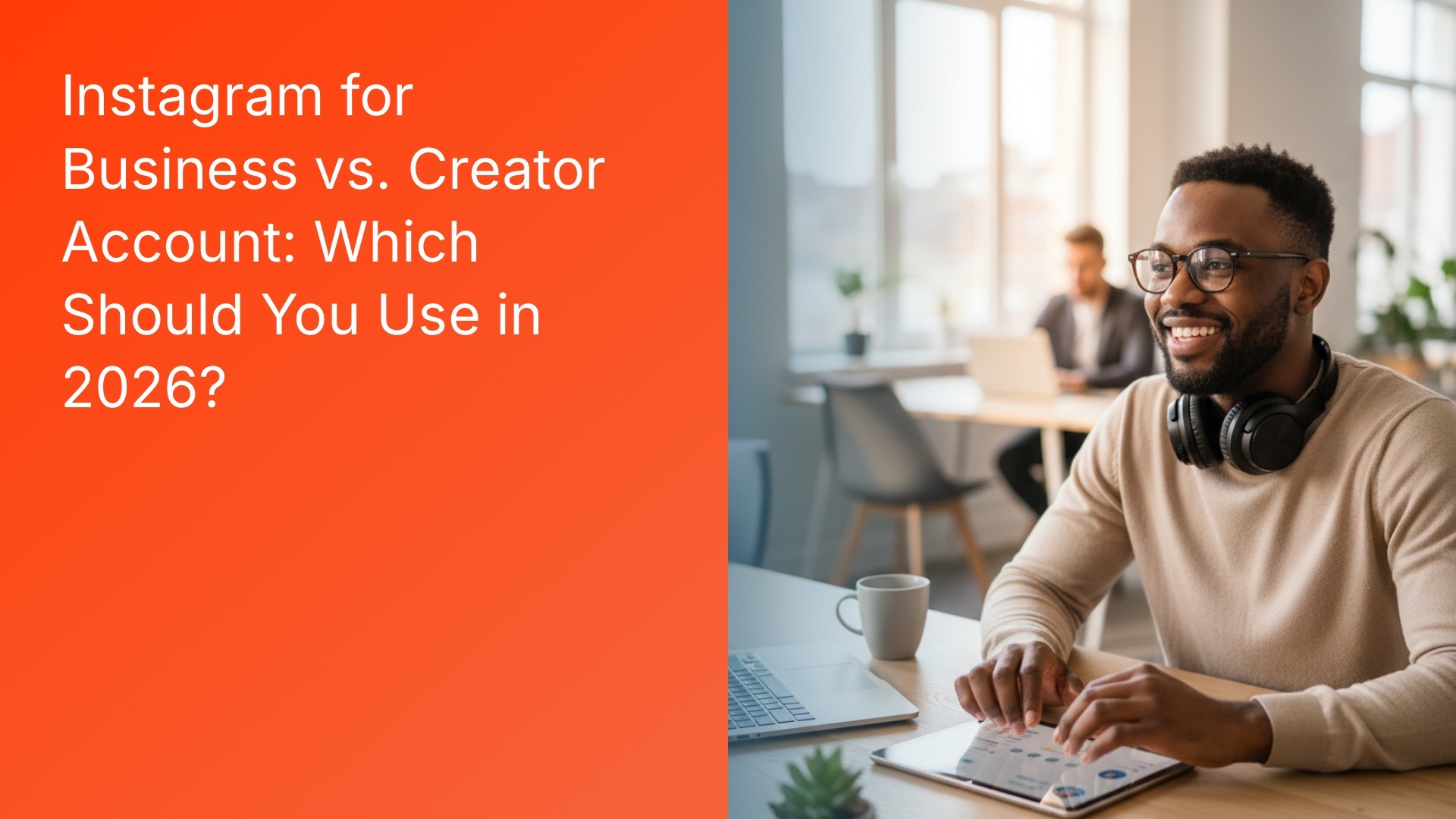
Key Takeaways (TL;DR):
Algorithm Logic: Switching accounts doesn't automatically boost reach; it alters intent signals and engagement context that the algorithm uses to categorize and distribute content.
Business Accounts: Best for users requiring full Ad Manager access, integrated booking buttons, and native in-app shopping features with direct catalog syncing.
Creator Accounts: Preferred for those focusing on brand partnerships, influencer transparency tools, and a native social feel while maintaining access to advanced insights.
Analytics Gaps: Regardless of account type, creators must implement external tracking like UTM parameters and server-side event capture to accurately measure conversions from bio links and DMs.
Operational Friction: Business accounts typically offer better compatibility with third-party scheduling and CRM tools, whereas Creator accounts may face API limitations for auto-publishing certain formats like Reels.
Decision Framework: Choose based on your revenue source—stay with Creator for sponsorships and DM sales, but move to Business for scaling paid ads or high-volume e-commerce.
How switching an Instagram account type actually changes reach signals — and why the algorithm sometimes reacts
People ask "Instagram business vs creator account — which one helps me reach more people?" The short answer: the account label itself is not a binary “boost” switch. But switching generates a cluster of side effects that alter signals the algorithm reads. Those are what matter. Expect changes in metadata, metadata-driven behavior, and the way you instrument measurement. Not magic.
When you toggle between personal, creator, and business, Instagram updates profile attributes (category, contact buttons, action buttons), permission sets (ad access, shopping), and API surface area (insights endpoints, third-party scheduling). These surface changes influence two important algorithm inputs: engagement context and intent signals. Engagement context is about what actions users take on your profile and posts; intent signals are about the kinds of actions Instagram thinks you want to drive (shopping, booking, lead gen).
Why does the algorithm care? Because Instagram optimizes for perceived value and utility for users. A profile tagged as a business with a "Book" or "Contact" button presents a different user intent profile than a creator without those buttons. That shifts predicted user satisfaction for particular content types. The result: the same Reel from two different account types can be weighted differently in distribution heuristics. Not always. But often enough to measure.
Practical consequence: switching can change the composition of organic distribution without changing your creative. The magnitude depends on follower size, content type, and how much you change downstream features like CTA buttons or shopping tags. For creators testing this, controlled experiments (A/B by posting the same asset from two accounts) are informative — though messy to run at scale.
One more nuance: switching may alter reach indirectly through behavior changes you make after switching. For example, turning on shopping tags encourages more product-focused posts; Instagram’s learning system will quickly classify you as transactional. That then shifts distribution toward shopping-interested audiences. So it's not just the account label. It's the subsequent content and the signals you collect.
If you want practical diagnostics, use the profile event stream available in Instagram analytics to compare pre- and post-switch engagement patterns. Look at CTR on bio link, saves, shares, and the lift (or drop) in impressions for Reels versus static posts.
Analytics access and attribution gaps: what the platforms give you — and where creators get blind spots
Switching to a business or creator account generally unlocks an expanded analytics panel. That feels good. But the devil is in the granularity and persistence of those metrics. Platforms provide high-level KPIs — reach, impressions, saves, shares, profile visits. They do not hand you complete, persistent attribution of downstream conversions (sales, bookings, email signups) without additional instrumentation.
Here’s how the pieces fit: Instagram gives engagement and content-level signals. Your payment processor, booking tool, and email platform hold conversion data. Stitching them together requires tracking beyond the platform. That's where the monetization layer concept becomes operational: monetization layer = attribution + offers + funnel logic + repeat revenue. Without an explicit layer that connects profile traffic to your offers and tracking, analytics remain descriptive rather than causal.
Common blind spots creators face:
Clicks that disappear: Instagram shows link clicks in Stories or bio but doesn't tell you which click resulted in a sale.
Session fragmentation: users hop between devices; without UTM/ID persistence, you lose the path.
Nonlinear funnels: many creators rely on DMs or comments as the trigger for a sale; these conversions rarely map cleanly to platform metrics.
Mitigation requires three things: persistent UTM tagging, centralized event capture (server-side where possible), and a simple funnel map that records the minimum viable set of conversions (click → landing → email → purchase). The guides on setting UTM parameters and affiliate tracking explain the pieces; start with a simple naming convention and enforce it.
For reference material on tagging and conversion mapping, see practical setups like the walkthrough on UTM parameters for creator content and the article that explains affiliate link tracking beyond clicks at affiliate link tracking that actually shows revenue.
Monetization mechanics by account type: what you can and cannot do in 2026
Creators often assume business accounts are required for every monetization option. That idea is partially true but incomplete. Instagram's feature gating has evolved: certain commerce features and ads require a business or creator profile, while other monetization pathways remain platform-agnostic.
Monetization Need | Creator Account | Business Account | Real-world caveats |
|---|---|---|---|
Branded content label & partner tools | Yes | Yes | Eligibility is still review-based; follower count and past behavior matter |
Instagram Shopping (product tags) | Possible (if linked catalog) | Preferred / required for some workflows | Catalog setup, tax and policy checks delay activation |
Ads & boosted posts | Limited via creator monetization partnerships | Full ad account access | Business accounts get Ad Manager; creators can run some promotions via Collabs or partner tools |
Call-to-action buttons (Book, Reserve) | Limited | Available | Third-party provider integrations determine UX quality |
Insights API access | Yes | Yes | Rate limits and sampling vary by account activity |
What breaks in reality:
Onboarding friction: even when features are “available”, policy checks and account reviews can delay use for weeks.
Catalog complexity: product feeds require mapping SKUs, images, and availability; creators selling a handful of digital products face the same setup friction as larger brands.
Ad-level optimization: business accounts get granular control; creators sometimes see limited ad creative formats that restrict testing.
If your monetization model relies on direct checkout from Instagram, a business account will generally provide fewer friction points. But if you primarily sell through DMs, guest posts, or off-platform funnels, the account label matters less than the reliability of your conversion tracking and the strength of your offer. For detailed playbooks on turning profile visits into buyers, the post on bio link optimization and the piece on selling via email sequences are practical complements.
Integrations, scheduling tools, and ad constraints: platform limits you will hit and workarounds that actually survive
One frequently overlooked area is the interplay between account type and third-party integrations. Scheduling, commerce platforms, and CRM connectors make different assumptions. Those assumptions are what break workflows.
Scheduling tools vary in capability. Some schedule to both creator and business accounts seamlessly; others offer only partial posting (e.g., push notifications instead of direct publish for Reels). The scheduling gap matters because it affects consistency and the signal Instagram uses to evaluate your activity cadence.
Ad capabilities are another constraint. Business accounts are the canonical path to full Ad Manager access. Creators can run some paid partnerships features, but they lack certain granular targeting or account-level controls that agencies rely on. If you plan to scale paid acquisition, business accounts reduce friction.
Integration Type | Typical Behavior on Creator Account | Typical Behavior on Business Account | Common Failure Mode |
|---|---|---|---|
Third-party scheduler | API-limited for certain formats | More direct publishing options | Stories and Reels may fall back to reminders rather than auto-post |
Commerce platform | May require business mapping | Direct catalog sync | Product approvals get stuck because catalog metadata is incomplete |
Analytics connectors | Limited metrics exported | More consistent API fields | Sampling and rate limits obscure true lift |
Booking/CTA buttons | Often unavailable | Available via partners | Button clicks may not pass referrer info to booking systems |
Workarounds that hold up in production:
Use server-side event capture to avoid client-side attribution loss.
Map product metadata before catalog import; don’t rely on automated scraping.
If scheduling is limited, batch-create drafts in the native app and publish manually on a timetable—painful but consistent.
One more practical note: tools that advertise "works with Instagram" may only guarantee a minimal set of features. Read the limitations. The article on link-in-bio tools with email marketing explains how integration claims often overstate what is tracked.
Decision framework: pick an Instagram account type based on concrete monetization models and friction tolerance
Stop asking generically "should I switch to business account Instagram?" Instead ask three operational questions that map directly to your monetization model and capacity for technical work:
Where does the majority of my revenue start? (profile link, DMs, shopping tags, paid ads)
How important is direct attribution to my pricing and partner relationships?
Can I tolerate platform onboarding friction (catalog approvals, ad account setup)?
Below is a decision matrix that scales those questions into pragmatic guidance.
Primary Revenue Start | Recommended Account Type | Why | Key actions to pair with the choice |
|---|---|---|---|
Profile bio link → landing page → product | Either creator or business | Both provide analytics; business slightly eases shopping enablement | Implement UTMs, use a robust bio link that connects to payment (see bio link future) |
In-app checkout / product tags | Business | Better catalog handling and commerce policy alignment | Pre-map SKUs, confirm tax and policy info, and pass structured data server-side |
DM-based sales and consulting bookings | Creator | Creator accounts keep the social feel and partner discovery tools | Use a booking link (external) with UTM and track conversions; connect to email capture |
Paid promotions and scaling ads | Business | Ad Manager, custom audiences, pixel access | Ensure Ad Manager is configured; verify pixel or conversion API implementation |
Affiliate and sponsorship ecosystem | Creator | Some brands prefer creator profiles for partnership transparency | Create a partner disclosure process; use trackable affiliate links (see affiliate link tracking) |
Couple of discipline-oriented rules of thumb from running creator operations:
If your funnel depends on reliable, server-verified conversions then favor business for technical access and easier catalog/CTA mapping. If your revenue mainly arrives out of conversations and creator-brand collaborations, stay creator — but formalize your tracking with UTMs and CRM entries.
And remember: account type is a control knob, not a business model. The system that matters is the monetization layer that connects profile traffic to payment infrastructure, booking system, and your email list. In practice, that means instrumenting attribution, standardizing offers, and automating funnel logic so revenue repeats. Tapmy’s conceptual framing of the monetization layer—monetization layer = attribution + offers + funnel logic + repeat revenue—is useful to carry into architectural decisions.
What breaks in real usage — failure patterns I’ve seen and how they manifest
On paper, switching account types and toggling features sounds straightforward. In production, the system fails along predictable fault lines. Developers and creators should watch for three classes of failure:
1) Permission drift — you change settings, some permissions propagate, others don't. Result: scheduled posts fail intermittently; third-party analytics lose access to stories. Permissions look fine in the UI. But tokens expire. The symptom is sporadic missing data.
2) Attribution leakage — users traverse multiple touchpoints (story → bio link → landing → email → purchase) and fragments break when cookies or UTM parameters are stripped. Sales are still happening, but you can’t attribute them to the post, which hurts decision-making.
3) Feature gating surprises — even when you meet eligibility rules for shopping, catalog or ads, policy checks or account history block activation. Sometimes a single past policy strike triggers prolonged freezes. The time cost is real and often under-accounted.
Below is a compact "what people try → what breaks → why" table. It’s practical for triage when your funnel misbehaves.
What people try | What breaks | Why |
|---|---|---|
Switch to business, enable shopping, tag products | Tags not showing; checkout errors | Catalog metadata mismatch; commerce policy review pending |
Use a link-in-bio tool for all offers | Sales not tied back to CTA; double manual reconciliation | Link tool strips UTM variants; email platform not receiving source |
Run boosted posts from Creator UI | Ad attribution differs from Ad Manager | Different attribution windows and event deduplication |
Rely on scheduling app for Reels | Reels post as reminders rather than native Reels | API limitations for Reels publishing on some account types |
These failures are not fatal. But they are predictable. Build acceptance tests: a scheduled post appears; bio link click ends in a UTM-tagged landing page; email capture records source. Small tests early will catch permission drift and attribution leakage before money is lost.
If you need a checklist-driven approach, the post on content calendars and the one about timing across niches are useful operational reads: content calendar and best times to post. They pair well with the technical checklist above.
Operational playbook: minimal integration architecture that survives account changes
A durable setup focuses on portability and idempotence. It should tolerate switching account types without breaking the funnel. Here’s an operational playbook that fits creators who want low-maintenance, reliable revenue paths.
Core components:
Persistent landing page system (hosted externally) that can accept traffic from any Instagram account type.
UTM and clicked-event capture at the landing server; store a lightweight session token tied to email capture.
Payment/booking integration that supports server-side callbacks for conversion confirmation.
Centralized analytics store that ingests platform-level metrics plus server-confirmed conversions.
Why this works: profiling and account changes are ephemeral. The only durable asset is your conversion endpoint. Keep it decoupled from the platform where possible. That means your bio link, story links, paid ads, and promoted posts all point to the same center of truth. The center records source, offer, and outcome.
Operational caveat: going server-side increases complexity. But the alternative — relying on platform-level reporting — yields delayed decisions and opaque ROIs. If you’re monetizing at any meaningful scale, instrument the conversion API or server-side webhook connections. For technique-level examples of linking conversion events back to your email and CRM, see the article on email-first selling and the bio link mobile optimization piece: email selling sequence and bio-link mobile optimization.
Final operational reminder: keep a lightweight rollback plan. If a catalog import or ad configuration causes a platform restriction, you need a way to pause shopping or ads without tearing down your funnel. Small, explicit safeguards save weeks of headache.
FAQ
If my primary goal is brand deals and sponsorships, is switching to a business account necessary?
Not strictly. Brands often prefer creator accounts because they signal personal reach and are built for partnerships. That said, some brands and agencies expect commerce features or specific metrics only present in business setups. The pragmatic route: keep the account as creator if you rely on DMs and organic partnerships, but ensure your reporting is rigorous (shared dashboards, trackable links). If a brand requires shopping or ad-level reporting, you can temporarily switch, but plan for the potential side effects on distribution.
Will switching to business improve my Reels distribution?
There is no deterministic improvement guaranteed. Distribution depends on signals like completion rate, saves, shares, and how your content fits viewer intent. Switching may tilt intent signals if you add shopping or CTAs that change user behavior. In some cases you’ll see no change; in others, distribution shifts because Instagram reclassifies the account’s goals. Test, measure, and accept uncertainty — the algorithm is probabilistic, not prescriptive.
How should a creator with low technical resources handle attribution when considering account type?
Keep it simple: always use UTM parameters on every link and a single hosted landing page that integrates with your email tool. If you can’t implement server-side events, at least ensure your email capture records source and timestamp so manual reconciliation is possible. Use basic spreadsheets and weekly checks to map high-level trends; upgrade to server-side capture when revenue grows enough to justify the effort.
Can I use a single monetization workflow across creator and business accounts?
Yes. The best practice is to design your monetization layer to be account-agnostic: make the link destination and tracking independent of Instagram’s account type. That way, switches only affect surface features, not the flow of money. Remember: the monetization layer is a combination of attribution, clear offers, funnel logic, and plans for repeat revenue. Keep those pieces central and portable.
What are practical indicators that I should switch to a business account?
If you need direct in-app commerce, full ad controls, booking buttons that integrate with your booking provider, or you plan to run ads at scale, switch. Also consider switching if platform reviews frequently block shopping features on creator accounts in your niche — some verticals encounter more friction. Otherwise, weigh the trade-offs: fewer platform frictions against the potential change in perceived intent and distribution.
For more guidance on how the algorithm treats different behaviors, the sibling piece on how the Instagram algorithm works in 2026 is a useful technical companion. If you want operational how-to's on content formats and posting cadence that survive account changes, check the posts about Reels strategy and organic growth: Reels strategy and organic growth without buying followers.
Finally, if you are evaluating tooling for your bio link, conversion infrastructure, or creator-specific pages, look at comparative articles like the future of link-in-bio and the review of link tools with email integrations at link-in-bio tools with email marketing. If your focus is timing and content planning, reference the scheduling and posting guides: content calendar and best posting times.
Related resources for specific technical steps: track shopping and product tags with catalog preparation guidance, and connect affiliate links using the recommendations in affiliate link tracking. For mobile-first conversions, read bio-link mobile optimization. If you want creator-specific pages or services, explore the company resources at Tapmy creators and consider business-oriented setups at Tapmy for business owners.