" height="32.00002387147419px" id="gZXGZYql_" transform="translate(0 0)" width="33.17407881260548px"/><path d="M 2.085 0 C 2.398 0.09 2.616 0.346 2.862 0.551 C 4.463 1.882 5.328 4.198 4.692 6.221 C 4.23 7.692 2.854 8.429 1.559 9.077 C 0.984 9.294 0.604 9.374 0 9.506 C 1.261 7.006 2.053 5.972 0.077 3.616 C 0.93 2.522 1.608 1.302 2.085 0 Z" fill="rgb(255, 255, 255)" height="9.505700000000001px" id="cmY0ROQXE" transform="translate(26.962 11.764)" width="4.902088461320112px"/><path d="M 2.786 0.079 C 4.516 -0.195 6.882 0.235 8.153 1.529 C 9.314 2.711 9.449 4.074 9.45 5.641 L 8.055 4.448 C 7.13 3.7 6.366 3.236 5.22 2.863 C 2.88 2.103 1.689 2.46 0 0.491 C 0.949 0.332 1.831 0.191 2.786 0.079 Z" fill="rgb(255, 255, 255)" height="5.640822256039236px" id="QF25qHlEr" transform="translate(19.227 1.379)" width="9.450099999999999px"/><path d="M 5.655 0 C 5.917 0.113 5.862 0.633 5.911 1.004 C 6.04 2.045 6.387 3.046 6.929 3.943 C 5.131 4.63 3.592 5.19 1.733 4.47 C 0.726 3.926 0.319 3.27 0 2.213 C 2.759 1.595 3.154 1.371 5.655 0 Z" fill="rgb(255, 255, 255)" height="4.806175899027007px" id="kqgl_H_Bc" transform="translate(10.595 23.332)" width="6.928799999999999px"/><path d="M 0 0 C 0.65 0.017 1.138 0.041 1.491 0.654 C 3.245 3.701 4.719 4.269 8.278 3.546 C 7.879 3.861 7.49 4.137 7.076 4.431 C 6.222 4.957 5.254 5.271 4.254 5.345 C 1.023 5.561 0.155 2.656 0 0 Z" fill="rgb(255, 255, 255)" height="5.356585200702476px" id="A5o1AXt5e" transform="translate(7.901 25.553)" width="8.277719999999999px"/><path d="M 1.582 0 C 1.889 0.239 1.638 0.793 1.582 1.267 C 1.337 3.362 1.705 4.763 2.654 6.583 C 2.182 7.09 1.586 7.662 1.092 8.161 L 0.98 8.239 L 0.826 8.184 C -0.289 5.719 -0.489 2.026 1.582 0 Z" fill="rgb(255, 255, 255)" height="8.23884px" id="K4X1nlNhw" transform="translate(1.373 8.977)" width="2.6544824443243806px"/><path d="M 4.879 0 L 5.154 0.02 C 5.173 0.055 5.191 0.089 5.21 0.124 C 4.076 1.11 3.076 1.841 2.163 3.07 C 0.899 4.77 1.042 6.073 0.594 7.936 C -0.71 7.351 0.477 3.227 0.911 2.183 C 1.385 1.046 3.753 0.398 4.879 0 Z" fill="rgb(255, 255, 255)" height="7.93632px" id="iX1WuEJsS" transform="translate(4.258 5.422)" width="5.209503656189256px"/><path d="M 0.891 0 C 1.252 0.397 0.785 0.972 2.043 1.993 C 3.579 2.288 5.164 2.203 6.66 1.745 C 6.19 2.232 5.777 2.59 5.268 3.03 C 5.209 3.074 5.149 3.118 5.09 3.162 C 3.442 4.368 1.179 3.903 0 2.267 C 0.206 1.503 0.429 0.651 0.891 0 Z" fill="rgb(255, 255, 255)" height="3.840138803869854px" id="EYhSkzb98" transform="translate(10.639 14.254)" width="6.660399999999999px"/><path d="M 5.7 0 L 5.862 0.129 C 5.871 0.163 5.899 0.278 5.896 0.313 C 5.7 2.553 3.858 4.223 1.838 4.943 C 1.312 5.131 0.79 5.181 0.227 5.231 C 0.062 5.156 0.114 5.18 0 5.006 C 0.058 4.568 2.368 2.938 2.85 2.535 C 3.828 1.716 4.745 0.832 5.7 0 Z" fill="rgb(255, 255, 255)" height="5.230699999999999px" id="rR3aItzbE" transform="translate(20.021 22.535)" width="5.895938333146585px"/><path d="M 1.798 0.061 C 2.392 -0.019 3.597 -0.071 4.125 0.244 C 4.638 0.944 4.484 2.507 3.821 3.106 C 3.426 3.233 3.583 3.227 3.161 3.071 C 2.323 2.592 0.895 1.713 0 1.493 C 0.65 0.799 0.954 0.488 1.798 0.061 Z" fill="rgb(255, 255, 255)" height="3.1951027036145305px" id="IMle10bWj" transform="translate(15.146 10.535)" width="4.430712176398055px"/><path d="M 0.018 0 C 0.282 0.063 1.864 1.126 2.331 1.364 C 3.197 1.804 3.346 1.876 4.34 2.173 C 4.251 2.864 4.215 3.588 4.169 4.285 C 3.236 4.526 0.886 2.837 0.45 1.956 C 0.031 1.109 -0.041 0.914 0.018 0 Z" fill="rgb(255, 255, 255)" height="4.308168324411934px" id="pheoyshQj" transform="translate(2.312 19.986)" width="4.339817240842605px"/><path d="M 0 0.027 C 0.439 0.014 1.2 -0.035 1.608 0.043 C 3.315 0.369 2.426 2.559 2.106 3.651 C 2.035 3.895 2.003 4.098 1.809 4.257 C 0.598 4.238 0.09 0.995 0 0.027 Z" fill="rgb(255, 255, 255)" height="4.257278283966036px" id="y4SOtrApl" transform="translate(22.564 5.982)" width="2.6241732006357594px"/><path d="M 2.53 0 C 3.199 0.233 4.697 4.443 1.642 3.339 C 0.801 2.889 0.575 2.665 0 1.9 C 0.709 1.252 1.74 0.538 2.53 0 Z" fill="rgb(255, 255, 255)" height="3.5230979695442386px" id="taMdD9ETv" transform="translate(22.166 17.775)" width="3.4914692646924834px"/><path d="M 1.922 0 L 2.08 0.004 C 2.445 0.65 1.939 4.817 0.934 5.155 L 0.716 5.046 C -0.285 2.784 -0.525 1.194 1.922 0 Z" fill="rgb(255, 255, 255)" height="5.154800000000002px" id="udg1KI2m_" transform="translate(17.619 21)" width="2.1985109419737654px"/><path d="M 0.58 0 C 0.964 0.148 2.564 1.331 3.056 1.648 L 1.563 3.194 C 0.988 3.708 0.635 3.938 0 4.353 C 0.455 2.537 0.619 1.856 0.58 0 Z" fill="rgb(255, 255, 255)" height="4.353200000000001px" id="hiTtHQeFA" transform="translate(20.577 20.867)" width="3.055799999999998px"/><path d="M 0.966 0 C 1.582 0.047 3.874 0.689 3.937 1.412 C 3.75 1.663 3.405 1.698 3.09 1.773 C 2.282 1.958 0.27 2.516 0 1.461 C 0.092 0.94 0.569 0.343 0.966 0 Z" fill="rgb(255, 255, 255)" height="2.0860744736189787px" id="opNh2nfUr" transform="translate(13.15 13.09)" width="3.9368px"/><path d="M 3.076 0 L 3.294 0.079 L 3.342 0.207 C 2.908 1.051 2.415 1.797 1.984 2.692 C 1.434 3.834 1.003 5.282 0.264 6.258 C 0.071 6.168 0.14 6.22 0.007 6.032 C -0.126 4.485 1.706 0.885 3.076 0 Z" fill="rgb(255, 255, 255)" height="6.258489999999999px" id="EXvZ1NrdY" transform="translate(5.901 7.504)" width="3.3417542024784233px"/><path d="M 1.308 0 C 1.265 -0.04 2.536 3.529 2.776 4.008 C 2.361 3.821 2.001 3.628 1.6 3.413 C -0.431 2.074 -0.528 1.77 1.308 0 Z" fill="rgb(255, 255, 255)" height="4.007940350226239px" id="p5Vi1bLFm" transform="translate(3.356 16.691)" width="2.7756652348500186px"/><path d="M 0.588 0 C 0.712 0.037 0.813 0.085 0.929 0.142 C 1.465 0.403 1.872 0.872 2.054 1.44 C 2.263 2.103 2.018 2.498 1.384 2.679 L 0 3.028 C 0.272 2.132 0.442 0.93 0.588 0 Z" fill="rgb(255, 255, 255)" height="3.0282500000000008px" id="V_zCzpfyC" transform="translate(25.759 6.998)" width="2.126652647905342px"/><path d="M 2.102 0 C 2.802 0.107 3.532 0.768 4.104 1.212 C 2.902 1.364 2.267 1.509 1.163 2.011 C 0.824 2.209 0.36 2.545 0 2.48 C 0.031 1.997 1.687 0.41 2.102 0 Z" fill="rgb(255, 255, 255)" height="2.4884510228622325px" id="KgZLUphip" transform="translate(11.2 5.676)" width="4.1045px"/><path d="M 4.112 0.034 C 4.292 -0.019 4.317 -0.009 4.495 0.055 L 4.521 0.223 C 4.183 0.728 0.99 2.723 0.316 3.048 C 0.138 3.125 0.208 3.106 0 3.08 C 0.021 1.932 3.087 0.317 4.112 0.034 Z" fill="rgb(255, 255, 255)" height="3.1028650031226688px" id="qq3hk8yZK" transform="translate(10.785 7.828)" width="4.521000000000001px"/><path d="M 0.141 0.077 C 0.594 0.026 1.199 -0.069 1.623 0.081 C 2.341 0.337 3.29 0.695 3.403 1.535 L 3.219 1.757 C 2.961 1.841 2.676 1.923 2.409 1.857 C 1.834 1.715 0.306 0.711 0 0.221 Z" fill="rgb(255, 255, 255)" height="1.8810147921990854px" id="JXpIE1opf" transform="translate(15.32 4.703)" width="3.402700000000001px"/><path d="M 2.72 0.04 C 3.046 -0.001 3.15 -0.015 3.474 0.019 C 3.811 0.283 3.818 0.442 3.722 0.835 C 3.251 1.286 1.932 1.16 1.172 1.177 C 0.817 1.19 0.234 1.272 0 0.991 C 0.298 0.535 2.175 0.141 2.72 0.04 Z" fill="rgb(255, 255, 255)" height="1.1983903643415106px" id="QP7_JZRtq" transform="translate(8.995 3.061)" width="3.775186453050104px"/><path d="M 0.193 0.028 C 1.37 0.006 2.502 -0.021 3.681 0.027 C 3.223 0.275 2.628 0.465 2.13 0.642 C 1.505 0.923 0.737 1.461 0.147 1.026 C -0.012 0.632 -0.1 0.34 0.193 0.028 Z" fill="rgb(255, 255, 255)" height="1.189605127915172px" id="hp2lulSqL" transform="translate(9.97 23.156)" width="3.6805205061196204px"/><path d="M 1.023 0.05 C 1.923 -0.054 2.723 0.02 3.611 0.123 C 3.049 0.38 2.64 0.478 2.041 0.637 C 1.403 0.827 0.635 0.996 0.014 0.719 L 0 0.546 C 0.275 0.253 0.639 0.176 1.023 0.05 Z" fill="rgb(255, 255, 255)" height="1px" id="BmzCHBA2O" transform="translate(12.984 20.51)" width="3.610699999999998px"/><path d="M 0.008 0 C 0.119 0.008 0.23 0.024 0.339 0.046 C 1.337 0.256 1.337 1.625 1.15 2.409 C 0.376 2.243 -0.065 0.695 0.008 0 Z" fill="rgb(255, 255, 255)" height="2.4094000000000015px" id="tsSE_BCay" transform="translate(25.73 16.309)" width="1.2458836048739457px"/><path d="M 1.441 0 C 1.549 0.032 1.598 0.072 1.694 0.13 C 1.849 0.779 0.893 1.983 0.316 2.281 C -0.694 1.786 1.001 0.423 1.441 0 Z" fill="rgb(255, 255, 255)" height="2.2813999999999997px" id="mFThfbOIR" transform="translate(24.705 11.035)" width="1.7107771516854555px"/><path d="M 0.141 0 C 1.206 0.231 0.974 1.087 0.864 1.994 C 0.686 1.994 0.499 1.983 0.321 1.976 C -0.202 1.571 0.05 0.579 0.141 0 Z" fill="rgb(255, 255, 255)" height="1.9940006770252907px" id="XFco5JL0X" transform="translate(7.804 22.531)" width="1px"/><path d="M 0.06 0.003 C 0.443 -0.011 0.745 0.019 1.018 0.308 C 1.167 0.605 1.121 0.707 1.042 1.04 C 0.621 1.007 0.402 0.977 0.105 0.675 C -0.03 0.37 -0.023 0.328 0.06 0.003 Z" fill="rgb(255, 255, 255)" height="1.0400327079323755px" id="w2Z9lCByC" transform="translate(16.894 2.666)" width="1.115859328834759px"/><path d="M 0 0.007 C 0.797 -0.068 1.456 0.475 1.871 1.112 C 1.087 1.119 0.44 0.625 0 0.007 Z" fill="rgb(255, 255, 255)" height="1.1116551820404172px" id="kl2V_0pZ0" transform="translate(19.418 7.047)" width="1.8714000000000013px"/><path d="M 0 0 L 11.42 0 L 11.42 1.52 L 6.58 1.52 L 6.58 14.24 L 4.84 14.24 L 4.84 1.52 L 0 1.52 Z M 18.664 12.94 L 19.244 12.94 L 19.244 14.24 C 18.978 14.28 18.684 14.3 18.364 14.3 C 17.284 14.3 16.704 13.807 16.624 12.82 C 15.904 13.927 14.784 14.48 13.264 14.48 C 12.131 14.48 11.238 14.22 10.584 13.7 C 9.944 13.167 9.624 12.42 9.624 11.46 C 9.624 9.593 10.898 8.527 13.444 8.26 L 14.924 8.1 C 16.004 7.98 16.544 7.507 16.544 6.68 C 16.544 6.107 16.364 5.693 16.004 5.44 C 15.658 5.187 15.064 5.06 14.224 5.06 C 13.331 5.06 12.684 5.213 12.284 5.52 C 11.898 5.813 11.678 6.34 11.624 7.1 L 10.024 7.1 C 10.158 4.82 11.558 3.68 14.224 3.68 C 16.811 3.68 18.104 4.68 18.104 6.68 L 18.104 12.44 C 18.104 12.773 18.291 12.94 18.664 12.94 Z M 13.344 13.12 C 14.198 13.12 14.944 12.86 15.584 12.34 C 16.224 11.833 16.544 11.107 16.544 10.16 L 16.544 8.94 C 16.251 9.167 15.798 9.313 15.184 9.38 L 13.684 9.56 C 12.818 9.667 12.198 9.867 11.824 10.16 C 11.464 10.453 11.284 10.873 11.284 11.42 C 11.284 11.953 11.458 12.373 11.804 12.68 C 12.151 12.973 12.664 13.12 13.344 13.12 Z M 25.314 3.68 C 26.767 3.68 27.934 4.167 28.814 5.14 C 29.681 6.127 30.114 7.44 30.114 9.08 C 30.114 10.707 29.681 12.013 28.814 13 C 27.934 13.987 26.767 14.48 25.314 14.48 C 23.834 14.48 22.681 13.907 21.854 12.76 L 21.854 18.16 L 20.254 18.16 L 20.254 3.92 L 21.774 3.92 L 21.774 5.52 C 22.601 4.293 23.781 3.68 25.314 3.68 Z M 25.114 13.04 C 26.114 13.04 26.914 12.68 27.514 11.96 C 28.127 11.227 28.434 10.24 28.434 9 C 28.434 7.787 28.134 6.84 27.534 6.16 C 26.947 5.467 26.141 5.12 25.114 5.12 C 24.101 5.12 23.294 5.467 22.694 6.16 C 22.094 6.853 21.794 7.827 21.794 9.08 C 21.794 10.32 22.094 11.287 22.694 11.98 C 23.294 12.687 24.101 13.04 25.114 13.04 Z M 42.472 3.68 C 43.592 3.68 44.458 4.007 45.072 4.66 C 45.698 5.3 46.012 6.16 46.012 7.24 L 46.012 14.24 L 44.412 14.24 L 44.412 7.4 C 44.412 5.88 43.692 5.12 42.252 5.12 C 41.492 5.12 40.858 5.427 40.352 6.04 C 39.858 6.64 39.612 7.493 39.612 8.6 L 39.612 14.24 L 38.012 14.24 L 38.012 7.4 C 38.012 5.88 37.292 5.12 35.852 5.12 C 35.105 5.12 34.478 5.427 33.972 6.04 C 33.465 6.64 33.212 7.493 33.212 8.6 L 33.212 14.24 L 31.612 14.24 L 31.612 3.92 L 33.132 3.92 L 33.132 5.44 C 33.812 4.267 34.805 3.68 36.112 3.68 C 37.658 3.68 38.718 4.327 39.292 5.62 C 40.012 4.327 41.072 3.68 42.472 3.68 Z M 52.581 8.2 L 54.041 3.92 L 55.781 3.92 L 51.421 15.86 C 51.114 16.727 50.694 17.333 50.161 17.68 C 49.627 18.04 48.927 18.22 48.061 18.22 C 47.767 18.22 47.447 18.2 47.101 18.16 L 47.101 16.82 L 48.041 16.82 C 48.961 16.82 49.587 16.393 49.921 15.54 L 50.281 14.58 L 46.401 3.92 L 48.161 3.92 L 49.621 8.22 C 50.141 9.74 50.634 11.227 51.101 12.68 C 51.487 11.44 51.981 9.947 52.581 8.2 Z" fill="rgb(3, 3, 3)" height="18.220000076293946px" id="glUGDzk9A" transform="translate(38.574 9.76)" width="55.78079879760742px"/></svg>)



" height="21.95706114703747px" id="qM5sFNDIS" transform="translate(3.459 1.023)" width="17.081538493872166px"/></svg>)
" height="16.041644077985946px" id="vPwWmgEb7" transform="translate(2.375 4.207)" width="19.249983003077222px"/></svg>)
" width="20px"><path d="M 0 20 L 0 0 L 20 0 L 20 20 Z" fill="transparent" height="20px" id="Iu2kCeaUT" width="20px"/><path d="M 4.531 6.206 L 0.253 6.206 L 0.253 19.08 L 4.531 19.08 Z M 2.393 4.449 C 3.884 4.449 4.813 3.46 4.813 2.224 C 4.785 0.961 3.884 0 2.421 0 C 0.957 0 0 0.961 0 2.224 C 0 3.46 0.929 4.449 2.364 4.449 Z M 11.178 19.08 L 11.178 11.89 C 11.178 11.506 11.206 11.121 11.319 10.847 C 11.628 10.077 12.333 9.281 13.515 9.281 C 15.063 9.281 15.682 10.462 15.682 12.193 L 15.682 19.08 L 19.961 19.08 L 19.961 11.698 C 19.961 7.744 17.85 5.904 15.034 5.904 C 12.765 5.904 11.747 7.152 11.178 8.029 L 11.178 6.206 L 6.899 6.206 C 6.956 7.414 6.899 19.08 6.899 19.08 Z" fill="rgb(0, 0, 0)" height="19.079659942779543px" id="hzLTqQuQE" transform="translate(0.02 0.461)" width="19.960870207061767px"/></g></svg>)
" height="18px" id="TrPl6m2Z8" transform="translate(1.75 3)" width="20.5px"/></svg>)
Key Takeaways (TL;DR):
The profile bio link is the most critical element for converting algorithmic exposure into traceable revenue and owned audiences.
Public profiles with completed bios experience approximately 40% more organic subscriber discovery compared to incomplete profiles.
Common setup hurdles include missing 'Create' buttons due to account age and image upload failures, which can often be resolved by switching to JPEG formats or clearing app caches.
Effective profiles use high-contrast headshots, keyword-aware display names, and a clear one-line value proposition in the bio.
Strategic alignment between Snap content and the landing page linked in the bio is essential to prevent drop-offs and maximize conversion intent.
Why the public profile bio link is the highest-leverage element on a Snapchat public profile
Creators often fixate on view counts and follower tallies, but the single field that consistently converts passive viewers into owned audiences or revenue is the profile bio link. Public profiles with complete bios receive ~40% more organic subscriber discovery, and the bio link is where that discovery turns into an explicit action: a click. That click is the traceable conversion event you can optimize.
Think of the bio link not as an afterthought but as the bridge between algorithmic exposure and an owned funnel. In practical terms: Spotlight or Discover drives attention; the public profile converts attention into a landing page visit; the landing page (or link-router) converts visits into capture or sale. Tapmy's perspective reframes the last step as a monetization layer = attribution + offers + funnel logic + repeat revenue. If you skip any component, you reduce the chance that a view turns into money or a mailing-list subscriber.
Put differently: the bio link is the locus of intent. People who click a profile link have higher intent than those who skim a Snap. Treat clicks as your most valuable event and instrument them accordingly.
But why does the bio link outperform other placements? There are three structural causes: first, the UX context — a profile click is a deliberate action after viewing content; second, the signal quality — the profile visitor has consumed at least one piece of content and thus has a narrower interest vector; third, platform constraints — Snapchat limits outbound link placements in ephemeral Snaps, while the public profile provides a persistent, discoverable link. The result is a high-conversion, low-noise entry point into your monetization stack.
Enabling a Snapchat public profile on iOS and Android: the steps that break in practice
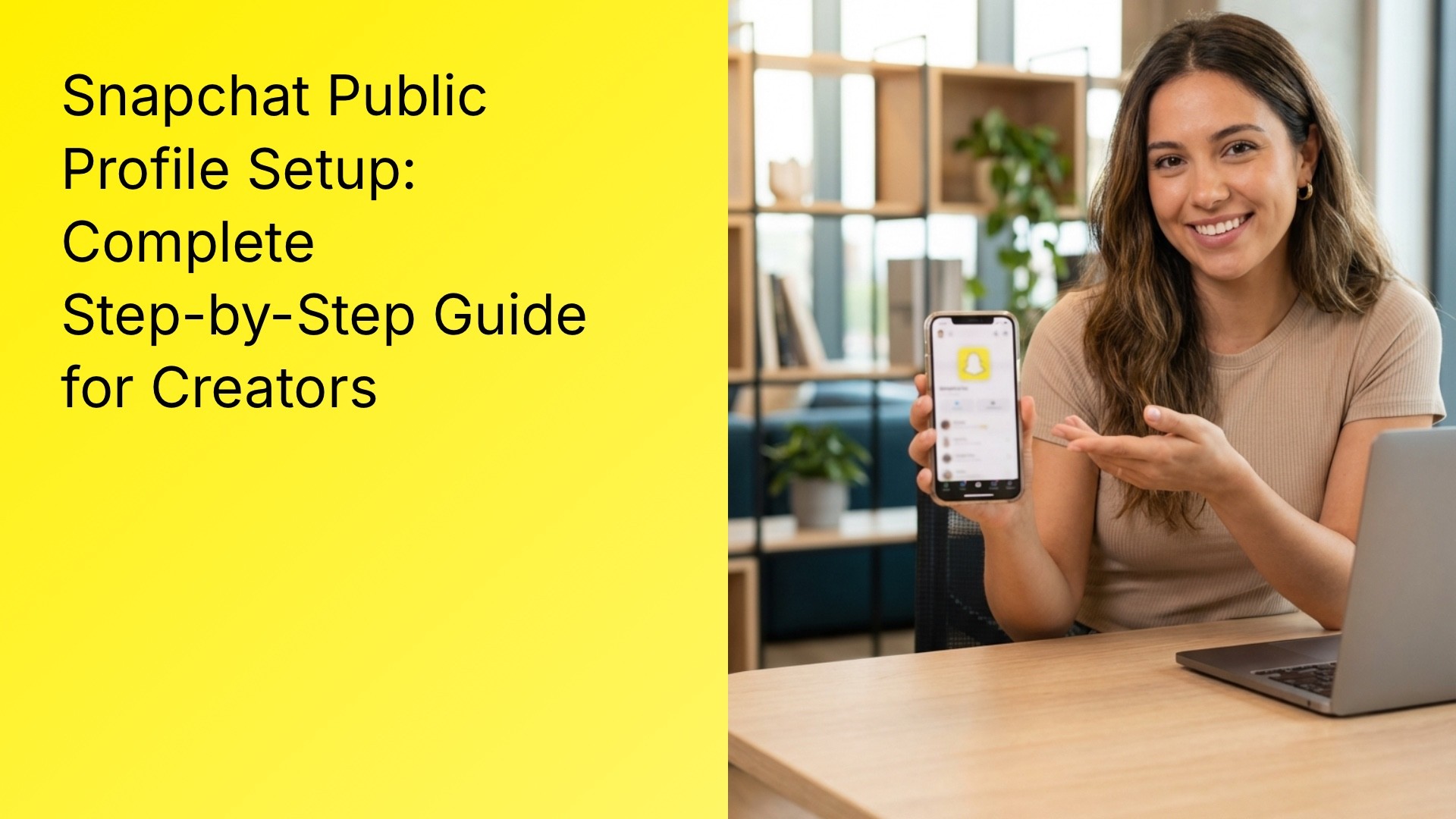
Snapchat offers a surface-level flow for turning a personal account into a public profile, but the documented steps are not the same as the steps you'll actually follow during a real onboarding. Platform differences, cached states, and account eligibility checks cause stalled upgrades in the field.
Below is a practical checklist that pairs the typical on-screen prompts with failure modes you will encounter and how to diagnose them quickly.
Action (what Snapchat shows) | Common failure in real usage | Quick diagnostic |
|---|---|---|
Open Profile → Create Public Profile button | Button missing or greyed out (often because account age or friend threshold fails) | Check account age, verify phone/email, and toggle airplane mode then back; review notification/email from Snapchat about eligibility |
Select profile name and choose profile photo | Profile photo upload rejected despite meeting size limits | Switch from HEIC/HEIF images to JPEG; reduce filename length; retry on Wi‑Fi |
Add category and topics | Category not saving or topics not visible to viewers | Check for regional restrictions; re-open profile editor and re-save; test visibility from a secondary account |
Enable subscriptions / Creator Marketplace | Options unavailable even when creator meets stated thresholds | Confirm account is converted to public profile first; consult Creator Program eligibility page for current rules |
Platform-specific notes:
iOS sometimes caches profile metadata aggressively. Expect a delay between saving and viewer-visible updates. If an image or bio doesn't propagate, force-close the app and clear cache where possible.
Android displays fewer inline prompts for Creator Marketplace configuration; you may need to access creator settings from the web version or wait for a staged rollout.
If the Create Public Profile button is missing entirely, don’t assume account removal or ban — test with another device or a secondary account and confirm whether Snapchat has rolled out the feature in your region. Finally, retain screenshots of eligibility messages; they help when you contact Snapchat support for stuck transitions.
Profile fields that move discoverability and conversions: what to set and why
Not all profile fields matter equally. Below are the elements that materially affect subscriber discovery and downstream conversions, with actionable best practices.
Profile photo: Use a high-contrast headshot or on-brand emblem that reads at small sizes. Snap thumbnails crop aggressively; test in-app. Avoid text overlays that vanish at 40px.
Display name vs username: The display name is searchable and should include one keyword or niche descriptor (not keyword-stuffed). The username is the immutable handle — keep it short, memorable, and consistent across platforms.
Bio: Treat it like a one-line value prop. Use a primary line that signals what a subscriber gets and a secondary line with a clear CTA. Public profiles with complete bios gain discoverability; flesh it out.
Category and topics: These feed algorithmic routing. Choose the most specific category that matches your content; if a precise match doesn’t exist, pick the closest and use topics to refine.
Website / bio link: The single outbound link. Use it to collect emails, route to a sale, or present a micro-offer. If you A/B test offers, use a link router that supports attribution so you know which Snap or series of Snaps generated the click.
Two practical examples that creators often miss:
Example A — a creator in finance uses "Investing tips" as a display name string and selects "Finance" as category. Their bio includes a high-value lead magnet link. Result: their content is surfaced to finance topic feeds and the bio link captures emails.
Example B — a fitness creator sets an evocative display name but leaves the bio blank and points the website link to a generic homepage. Result: algorithmic routing is weaker; clicks that happen are less likely to convert because the landing page doesn't match the content intent.
One last point: visitors interpret mismatches harshly. If your Snap promises quick tips and the bio link lands on a long-form course without a preview, conversion drops. So align offer format with content intent.
Subscription settings, Creator Marketplace, and third-party social links — trade-offs and failure modes
Converting to a public profile exposes toggles and features that influence discoverability and revenue, but enabling everything isn't always the best move. There are trade-offs and platform constraints to consider.
First: subscriptions. Enabling subscriptions gives followers a mechanism to opt into updates, but it also changes how your notifications behave and how your content surfaces. In some cases, creators report minor algorithmic preference for profiles with active subscriptions because they indicate repeat engagement; others see no change. The truth is mixed — treat subscription settings as an experiment, not a guaranteed boost.
Next: Creator Marketplace. Opting in makes your profile discoverable by brands, but it exposes you to outreach volume and often increases administrative work (negotiations, deliverables). If you aren’t prepared to handle branded inquiries, consider using a separate contact funnel or notification filter.
What people try | What breaks | Why it breaks |
|---|---|---|
Enable subscriptions and keep bio link generic | Higher visibility but low conversion | Subscribers arrive but see an irrelevant landing page; intent mismatch |
Turn on Creator Marketplace without vetting brands | Flood of low-quality offers; poor brand fit | Marketplaces surface volume, not quality; brand outreach requires filters |
Link all social accounts to profile | Fragmented traffic; low funnel control | Multiple destinations dilute conversion and reduce tracking fidelity |
Linking other social accounts has utility — cross-platform discovery is real — but it also scatters attention. If your goal is email capture or a paid offer, keep the bio link as the canonical funnel and use other social links only when they serve discovery, not conversion.
Platform limitations to be aware of:
Not all regions get Creator Marketplace simultaneously; eligibility criteria change.
Subscriptions can be toggled, but Snapchat controls notification frequency and may throttle pushes to prevent spam.
Outbound link behavior in Snap ads differs from public profile links. Don’t assume parity.
When in doubt, document the exact moment you enable or disable a setting. That timestamp will help you correlate downstream metrics and avoid mistaking noise for effect.
Profile audit checklist and testing funnel: how to measure which Snaps drove external clicks
Converting the profile bio link into reliable revenue requires two disciplines: audit hygiene and instrumented testing. Below is a practical checklist followed by a suggested test matrix you can run across a two-week window.
Audit hygiene
Confirm profile is public from an incognito or secondary account and record the timestamp.
Snapshot all profile fields (photo, display name, username, bio, category, topics, linked accounts, website).
Ensure the bio link uses a link-router that supports UTM-style parameters and click-level attribution. If you rely on a simple landing page, add unique query strings per campaign.
Document subscription and Creator Marketplace toggles and dates.
Set up a minimal analytics endpoint (email capture, Google Analytics, or the link-router’s dashboard) to record source and timestamp of every visit.
Testing funnel (two-week matrix)
Test | Signal | What to measure | Expected insight |
|---|---|---|---|
Single Snap → bio link | Direct conversion | Click rate from Snap to bio link; landing page bounce | Baseline CTR for this content format |
Series of 3 related Snaps → same bio link | Sequential exposure | Time-to-click distribution; repeat page visits | Whether multiple exposures increase conversions |
Snap with unique short UTM → routed offer | Attribution clarity | Which creative generated the click; conversion rate by creative | Creative-level performance |
One practical pitfall: creators often rely on the link-router's dashboard for attribution without validating raw server logs. If the router overwrites UTM tags or strips referers, your per-Snap attribution will be noisy. Use redundancy: UTM tags plus a server-side event if possible.
Tapmy's approach — and a useful model if you run your own routing — is to treat the link router as the point of truth for attribution, then push conversion events from the landing page back into your analytics. That preserves the causal chain: Snap → profile visit → router click → landing event. If you want a deeper read on funnels and attribution patterns, see our discussion of multi-step conversion paths in advanced creator funnels.
Finally, remember that metrics show patterns, not truths. A sudden increase in bio link clicks after a content spike might be driven by an external reshare. Always triangulate: platform insights, link-router, and server logs.
Operational patterns, repeated failure modes, and pragmatic fixes
Operationally, creators run into a predictable set of failure modes when they try to turn profile traffic into revenue. Below are the common patterns and how creators who operate at scale avoid them.
Failure mode: Intent mismatch between Snap and landing experience.
Fix: Create micro-offers that match the content promise. If your Snap shows a 30-second recipe tip, link to a single printable recipe or a short email series — not a 12‑module paid course. Matching formats reduces friction.
Failure mode: Attribution heat-loss due to link duplication.
Fix: Use unique parameters per campaign and make those parameters immutable upon redirect. If you change the target page mid-campaign, preserve the original param set.
Failure mode: Overlinking. Creators add every social handle to the profile, fragmenting traffic.
Fix: Make the bio link the canonical conversion path. Use secondary links sparingly and only for discovery or credibility, not for immediate capture.
Failure mode: Passive monitoring instead of deliberate A/B testing.
Fix: Run short A/B tests (3–7 days) on bio copy and landing page headlines. Small, iterative wins compound quickly.
Below is a decision matrix to choose between bio link approaches depending on your immediate objective.
Objective | Use bio link to | Why | When not to use |
|---|---|---|---|
Grow email list | Link to a single-field capture page with incentive | Lowest friction; directly owned audience | If you lack a content upgrade or offer |
Sells low-ticket offers | Link to a product page or a one-time-offer funnel | Short funnel reduces drop-off | If you have a high-ticket product not ready for impulse buys |
Test multiple offers | Use a router that can split and attribute | Enables creative-level performance data | When you have little traffic (noise dominates) |
For creators converting significant volume, the bio link becomes a control point for routing traffic to segmented offers. There is an ecosystem of link-router choices — if you want a primer on link-in-bio mechanics and alternatives, check our guide on bio links and a comparison of solutions at best Linktree alternatives.
Where the public profile interacts with the broader Spotlight strategy
A public profile doesn't operate in isolation. It sits at the intersection of your content plan and your distribution strategy. Spotlight drives discovery; your profile converts. Aligning those two systems is non-trivial.
If you want practical workflows for turning Spotlight views into repeat buyers or subscribers, start by reading the parent-level strategy we reference in the broader series: how creators grow and monetize on Spotlight in 2026. That article frames the full system; here we concentrate on the profile's role in the funnel.
Cross-posting and repurposing content changes expectations. An audience that finds you via a repurposed TikTok clip might expect the same cadence or product offer; mismatch causes friction. See our notes on cross-posting to learn how to adapt creative when you move content between platforms: cross-posting best practices.
If your aim is to build an owned list, pair the bio link with a light, contextually relevant magnet and then deploy a follow-up drip. For a detailed blueprint that maps Spotlight performance to list growth, see building an email list from Spotlight.
One final operational tip: use creative-level UTMs and keep a small internal playbook that maps creative hooks to the landing offers you test. For creative-level experimentation guidance, consult our articles on hooks and on ab-testing: writing opening frames and Spotlight A/B testing.
FAQ
How do I create Snapchat public profile if the "Create Public Profile" button doesn't appear?
If the button is missing, first check account eligibility: age, account verification, and region. Then test from a different device or network; iOS caching can hide the option. If still missing, review any in-app messages or emails from Snapchat about rollout or eligibility. You can also try to trigger the path by posting Spotlight content or joining a creator program — sometimes activity flags the account as eligible. If none of this helps, reach out to Snapchat support with screenshots and timestamps; include your account ID and prior steps.
Should the bio link point to my course, my Link-in-bio page, or directly to a product?
It depends on your traffic volume and your objective. For discovery-to-capture (email lists), a single-field opt-in with a relevant incentive is lowest-friction. For low-ticket impulse sales, direct product pages work if the product aligns tightly with the content. If you run many tests or need to route different audiences to different offers, a link router that supports per-visit splitting and attribution reduces complexity. There is no one-size-fits-all; match the landing format to user intent.
Does enabling subscriptions improve Spotlight distribution?
Reports are mixed. Some creators observe modest distribution changes after enabling subscriptions; others see no measurable effect. The platform's algorithm is opaque and likely considers many signals. Treat the subscription toggle as an experimental variable: enable it, document the date, and compare pre/post engagement metrics over a 2–4 week window. Use that evidence rather than assumptions.
How do I track which specific Snap drove a bio link click when multiple Snaps point to the same profile?
Use unique UTM parameters or short link variants for each Snap. If you rely on a router, append a creative ID to the routed URL so clicks include an identifier. On the landing page, capture that identifier server-side and log it with conversions. Redundancy helps: track referral UTM, router metadata, and server logs. If you need an example implementation, our piece on multi-step conversion paths outlines event sequencing and attribution reliability considerations.
Should I link all my social accounts from the public profile?
Linking other platforms aids discovery, but it fragments clicks. If your immediate goal is conversions or email capture, keep the profile focused: one canonical bio link that drives your funnel, and reserve other social links for discovery only when they feed back to your funnel. If you need a decision framework for choosing link tools, see comparisons like Linktree vs Beacons and segmentation strategies at advanced segmentation for link-in-bio.
For creators wanting operational support or to join a community of practitioners, check our industry pages to see where similar creators congregate: Creators, Influencers, and Experts.