" height="32.00002387147419px" id="gZXGZYql_" transform="translate(0 0)" width="33.17407881260548px"/><path d="M 2.085 0 C 2.398 0.09 2.616 0.346 2.862 0.551 C 4.463 1.882 5.328 4.198 4.692 6.221 C 4.23 7.692 2.854 8.429 1.559 9.077 C 0.984 9.294 0.604 9.374 0 9.506 C 1.261 7.006 2.053 5.972 0.077 3.616 C 0.93 2.522 1.608 1.302 2.085 0 Z" fill="rgb(255, 255, 255)" height="9.505700000000001px" id="cmY0ROQXE" transform="translate(26.962 11.764)" width="4.902088461320112px"/><path d="M 2.786 0.079 C 4.516 -0.195 6.882 0.235 8.153 1.529 C 9.314 2.711 9.449 4.074 9.45 5.641 L 8.055 4.448 C 7.13 3.7 6.366 3.236 5.22 2.863 C 2.88 2.103 1.689 2.46 0 0.491 C 0.949 0.332 1.831 0.191 2.786 0.079 Z" fill="rgb(255, 255, 255)" height="5.640822256039236px" id="QF25qHlEr" transform="translate(19.227 1.379)" width="9.450099999999999px"/><path d="M 5.655 0 C 5.917 0.113 5.862 0.633 5.911 1.004 C 6.04 2.045 6.387 3.046 6.929 3.943 C 5.131 4.63 3.592 5.19 1.733 4.47 C 0.726 3.926 0.319 3.27 0 2.213 C 2.759 1.595 3.154 1.371 5.655 0 Z" fill="rgb(255, 255, 255)" height="4.806175899027007px" id="kqgl_H_Bc" transform="translate(10.595 23.332)" width="6.928799999999999px"/><path d="M 0 0 C 0.65 0.017 1.138 0.041 1.491 0.654 C 3.245 3.701 4.719 4.269 8.278 3.546 C 7.879 3.861 7.49 4.137 7.076 4.431 C 6.222 4.957 5.254 5.271 4.254 5.345 C 1.023 5.561 0.155 2.656 0 0 Z" fill="rgb(255, 255, 255)" height="5.356585200702476px" id="A5o1AXt5e" transform="translate(7.901 25.553)" width="8.277719999999999px"/><path d="M 1.582 0 C 1.889 0.239 1.638 0.793 1.582 1.267 C 1.337 3.362 1.705 4.763 2.654 6.583 C 2.182 7.09 1.586 7.662 1.092 8.161 L 0.98 8.239 L 0.826 8.184 C -0.289 5.719 -0.489 2.026 1.582 0 Z" fill="rgb(255, 255, 255)" height="8.23884px" id="K4X1nlNhw" transform="translate(1.373 8.977)" width="2.6544824443243806px"/><path d="M 4.879 0 L 5.154 0.02 C 5.173 0.055 5.191 0.089 5.21 0.124 C 4.076 1.11 3.076 1.841 2.163 3.07 C 0.899 4.77 1.042 6.073 0.594 7.936 C -0.71 7.351 0.477 3.227 0.911 2.183 C 1.385 1.046 3.753 0.398 4.879 0 Z" fill="rgb(255, 255, 255)" height="7.93632px" id="iX1WuEJsS" transform="translate(4.258 5.422)" width="5.209503656189256px"/><path d="M 0.891 0 C 1.252 0.397 0.785 0.972 2.043 1.993 C 3.579 2.288 5.164 2.203 6.66 1.745 C 6.19 2.232 5.777 2.59 5.268 3.03 C 5.209 3.074 5.149 3.118 5.09 3.162 C 3.442 4.368 1.179 3.903 0 2.267 C 0.206 1.503 0.429 0.651 0.891 0 Z" fill="rgb(255, 255, 255)" height="3.840138803869854px" id="EYhSkzb98" transform="translate(10.639 14.254)" width="6.660399999999999px"/><path d="M 5.7 0 L 5.862 0.129 C 5.871 0.163 5.899 0.278 5.896 0.313 C 5.7 2.553 3.858 4.223 1.838 4.943 C 1.312 5.131 0.79 5.181 0.227 5.231 C 0.062 5.156 0.114 5.18 0 5.006 C 0.058 4.568 2.368 2.938 2.85 2.535 C 3.828 1.716 4.745 0.832 5.7 0 Z" fill="rgb(255, 255, 255)" height="5.230699999999999px" id="rR3aItzbE" transform="translate(20.021 22.535)" width="5.895938333146585px"/><path d="M 1.798 0.061 C 2.392 -0.019 3.597 -0.071 4.125 0.244 C 4.638 0.944 4.484 2.507 3.821 3.106 C 3.426 3.233 3.583 3.227 3.161 3.071 C 2.323 2.592 0.895 1.713 0 1.493 C 0.65 0.799 0.954 0.488 1.798 0.061 Z" fill="rgb(255, 255, 255)" height="3.1951027036145305px" id="IMle10bWj" transform="translate(15.146 10.535)" width="4.430712176398055px"/><path d="M 0.018 0 C 0.282 0.063 1.864 1.126 2.331 1.364 C 3.197 1.804 3.346 1.876 4.34 2.173 C 4.251 2.864 4.215 3.588 4.169 4.285 C 3.236 4.526 0.886 2.837 0.45 1.956 C 0.031 1.109 -0.041 0.914 0.018 0 Z" fill="rgb(255, 255, 255)" height="4.308168324411934px" id="pheoyshQj" transform="translate(2.312 19.986)" width="4.339817240842605px"/><path d="M 0 0.027 C 0.439 0.014 1.2 -0.035 1.608 0.043 C 3.315 0.369 2.426 2.559 2.106 3.651 C 2.035 3.895 2.003 4.098 1.809 4.257 C 0.598 4.238 0.09 0.995 0 0.027 Z" fill="rgb(255, 255, 255)" height="4.257278283966036px" id="y4SOtrApl" transform="translate(22.564 5.982)" width="2.6241732006357594px"/><path d="M 2.53 0 C 3.199 0.233 4.697 4.443 1.642 3.339 C 0.801 2.889 0.575 2.665 0 1.9 C 0.709 1.252 1.74 0.538 2.53 0 Z" fill="rgb(255, 255, 255)" height="3.5230979695442386px" id="taMdD9ETv" transform="translate(22.166 17.775)" width="3.4914692646924834px"/><path d="M 1.922 0 L 2.08 0.004 C 2.445 0.65 1.939 4.817 0.934 5.155 L 0.716 5.046 C -0.285 2.784 -0.525 1.194 1.922 0 Z" fill="rgb(255, 255, 255)" height="5.154800000000002px" id="udg1KI2m_" transform="translate(17.619 21)" width="2.1985109419737654px"/><path d="M 0.58 0 C 0.964 0.148 2.564 1.331 3.056 1.648 L 1.563 3.194 C 0.988 3.708 0.635 3.938 0 4.353 C 0.455 2.537 0.619 1.856 0.58 0 Z" fill="rgb(255, 255, 255)" height="4.353200000000001px" id="hiTtHQeFA" transform="translate(20.577 20.867)" width="3.055799999999998px"/><path d="M 0.966 0 C 1.582 0.047 3.874 0.689 3.937 1.412 C 3.75 1.663 3.405 1.698 3.09 1.773 C 2.282 1.958 0.27 2.516 0 1.461 C 0.092 0.94 0.569 0.343 0.966 0 Z" fill="rgb(255, 255, 255)" height="2.0860744736189787px" id="opNh2nfUr" transform="translate(13.15 13.09)" width="3.9368px"/><path d="M 3.076 0 L 3.294 0.079 L 3.342 0.207 C 2.908 1.051 2.415 1.797 1.984 2.692 C 1.434 3.834 1.003 5.282 0.264 6.258 C 0.071 6.168 0.14 6.22 0.007 6.032 C -0.126 4.485 1.706 0.885 3.076 0 Z" fill="rgb(255, 255, 255)" height="6.258489999999999px" id="EXvZ1NrdY" transform="translate(5.901 7.504)" width="3.3417542024784233px"/><path d="M 1.308 0 C 1.265 -0.04 2.536 3.529 2.776 4.008 C 2.361 3.821 2.001 3.628 1.6 3.413 C -0.431 2.074 -0.528 1.77 1.308 0 Z" fill="rgb(255, 255, 255)" height="4.007940350226239px" id="p5Vi1bLFm" transform="translate(3.356 16.691)" width="2.7756652348500186px"/><path d="M 0.588 0 C 0.712 0.037 0.813 0.085 0.929 0.142 C 1.465 0.403 1.872 0.872 2.054 1.44 C 2.263 2.103 2.018 2.498 1.384 2.679 L 0 3.028 C 0.272 2.132 0.442 0.93 0.588 0 Z" fill="rgb(255, 255, 255)" height="3.0282500000000008px" id="V_zCzpfyC" transform="translate(25.759 6.998)" width="2.126652647905342px"/><path d="M 2.102 0 C 2.802 0.107 3.532 0.768 4.104 1.212 C 2.902 1.364 2.267 1.509 1.163 2.011 C 0.824 2.209 0.36 2.545 0 2.48 C 0.031 1.997 1.687 0.41 2.102 0 Z" fill="rgb(255, 255, 255)" height="2.4884510228622325px" id="KgZLUphip" transform="translate(11.2 5.676)" width="4.1045px"/><path d="M 4.112 0.034 C 4.292 -0.019 4.317 -0.009 4.495 0.055 L 4.521 0.223 C 4.183 0.728 0.99 2.723 0.316 3.048 C 0.138 3.125 0.208 3.106 0 3.08 C 0.021 1.932 3.087 0.317 4.112 0.034 Z" fill="rgb(255, 255, 255)" height="3.1028650031226688px" id="qq3hk8yZK" transform="translate(10.785 7.828)" width="4.521000000000001px"/><path d="M 0.141 0.077 C 0.594 0.026 1.199 -0.069 1.623 0.081 C 2.341 0.337 3.29 0.695 3.403 1.535 L 3.219 1.757 C 2.961 1.841 2.676 1.923 2.409 1.857 C 1.834 1.715 0.306 0.711 0 0.221 Z" fill="rgb(255, 255, 255)" height="1.8810147921990854px" id="JXpIE1opf" transform="translate(15.32 4.703)" width="3.402700000000001px"/><path d="M 2.72 0.04 C 3.046 -0.001 3.15 -0.015 3.474 0.019 C 3.811 0.283 3.818 0.442 3.722 0.835 C 3.251 1.286 1.932 1.16 1.172 1.177 C 0.817 1.19 0.234 1.272 0 0.991 C 0.298 0.535 2.175 0.141 2.72 0.04 Z" fill="rgb(255, 255, 255)" height="1.1983903643415106px" id="QP7_JZRtq" transform="translate(8.995 3.061)" width="3.775186453050104px"/><path d="M 0.193 0.028 C 1.37 0.006 2.502 -0.021 3.681 0.027 C 3.223 0.275 2.628 0.465 2.13 0.642 C 1.505 0.923 0.737 1.461 0.147 1.026 C -0.012 0.632 -0.1 0.34 0.193 0.028 Z" fill="rgb(255, 255, 255)" height="1.189605127915172px" id="hp2lulSqL" transform="translate(9.97 23.156)" width="3.6805205061196204px"/><path d="M 1.023 0.05 C 1.923 -0.054 2.723 0.02 3.611 0.123 C 3.049 0.38 2.64 0.478 2.041 0.637 C 1.403 0.827 0.635 0.996 0.014 0.719 L 0 0.546 C 0.275 0.253 0.639 0.176 1.023 0.05 Z" fill="rgb(255, 255, 255)" height="1px" id="BmzCHBA2O" transform="translate(12.984 20.51)" width="3.610699999999998px"/><path d="M 0.008 0 C 0.119 0.008 0.23 0.024 0.339 0.046 C 1.337 0.256 1.337 1.625 1.15 2.409 C 0.376 2.243 -0.065 0.695 0.008 0 Z" fill="rgb(255, 255, 255)" height="2.4094000000000015px" id="tsSE_BCay" transform="translate(25.73 16.309)" width="1.2458836048739457px"/><path d="M 1.441 0 C 1.549 0.032 1.598 0.072 1.694 0.13 C 1.849 0.779 0.893 1.983 0.316 2.281 C -0.694 1.786 1.001 0.423 1.441 0 Z" fill="rgb(255, 255, 255)" height="2.2813999999999997px" id="mFThfbOIR" transform="translate(24.705 11.035)" width="1.7107771516854555px"/><path d="M 0.141 0 C 1.206 0.231 0.974 1.087 0.864 1.994 C 0.686 1.994 0.499 1.983 0.321 1.976 C -0.202 1.571 0.05 0.579 0.141 0 Z" fill="rgb(255, 255, 255)" height="1.9940006770252907px" id="XFco5JL0X" transform="translate(7.804 22.531)" width="1px"/><path d="M 0.06 0.003 C 0.443 -0.011 0.745 0.019 1.018 0.308 C 1.167 0.605 1.121 0.707 1.042 1.04 C 0.621 1.007 0.402 0.977 0.105 0.675 C -0.03 0.37 -0.023 0.328 0.06 0.003 Z" fill="rgb(255, 255, 255)" height="1.0400327079323755px" id="w2Z9lCByC" transform="translate(16.894 2.666)" width="1.115859328834759px"/><path d="M 0 0.007 C 0.797 -0.068 1.456 0.475 1.871 1.112 C 1.087 1.119 0.44 0.625 0 0.007 Z" fill="rgb(255, 255, 255)" height="1.1116551820404172px" id="kl2V_0pZ0" transform="translate(19.418 7.047)" width="1.8714000000000013px"/><path d="M 0 0 L 11.42 0 L 11.42 1.52 L 6.58 1.52 L 6.58 14.24 L 4.84 14.24 L 4.84 1.52 L 0 1.52 Z M 18.664 12.94 L 19.244 12.94 L 19.244 14.24 C 18.978 14.28 18.684 14.3 18.364 14.3 C 17.284 14.3 16.704 13.807 16.624 12.82 C 15.904 13.927 14.784 14.48 13.264 14.48 C 12.131 14.48 11.238 14.22 10.584 13.7 C 9.944 13.167 9.624 12.42 9.624 11.46 C 9.624 9.593 10.898 8.527 13.444 8.26 L 14.924 8.1 C 16.004 7.98 16.544 7.507 16.544 6.68 C 16.544 6.107 16.364 5.693 16.004 5.44 C 15.658 5.187 15.064 5.06 14.224 5.06 C 13.331 5.06 12.684 5.213 12.284 5.52 C 11.898 5.813 11.678 6.34 11.624 7.1 L 10.024 7.1 C 10.158 4.82 11.558 3.68 14.224 3.68 C 16.811 3.68 18.104 4.68 18.104 6.68 L 18.104 12.44 C 18.104 12.773 18.291 12.94 18.664 12.94 Z M 13.344 13.12 C 14.198 13.12 14.944 12.86 15.584 12.34 C 16.224 11.833 16.544 11.107 16.544 10.16 L 16.544 8.94 C 16.251 9.167 15.798 9.313 15.184 9.38 L 13.684 9.56 C 12.818 9.667 12.198 9.867 11.824 10.16 C 11.464 10.453 11.284 10.873 11.284 11.42 C 11.284 11.953 11.458 12.373 11.804 12.68 C 12.151 12.973 12.664 13.12 13.344 13.12 Z M 25.314 3.68 C 26.767 3.68 27.934 4.167 28.814 5.14 C 29.681 6.127 30.114 7.44 30.114 9.08 C 30.114 10.707 29.681 12.013 28.814 13 C 27.934 13.987 26.767 14.48 25.314 14.48 C 23.834 14.48 22.681 13.907 21.854 12.76 L 21.854 18.16 L 20.254 18.16 L 20.254 3.92 L 21.774 3.92 L 21.774 5.52 C 22.601 4.293 23.781 3.68 25.314 3.68 Z M 25.114 13.04 C 26.114 13.04 26.914 12.68 27.514 11.96 C 28.127 11.227 28.434 10.24 28.434 9 C 28.434 7.787 28.134 6.84 27.534 6.16 C 26.947 5.467 26.141 5.12 25.114 5.12 C 24.101 5.12 23.294 5.467 22.694 6.16 C 22.094 6.853 21.794 7.827 21.794 9.08 C 21.794 10.32 22.094 11.287 22.694 11.98 C 23.294 12.687 24.101 13.04 25.114 13.04 Z M 42.472 3.68 C 43.592 3.68 44.458 4.007 45.072 4.66 C 45.698 5.3 46.012 6.16 46.012 7.24 L 46.012 14.24 L 44.412 14.24 L 44.412 7.4 C 44.412 5.88 43.692 5.12 42.252 5.12 C 41.492 5.12 40.858 5.427 40.352 6.04 C 39.858 6.64 39.612 7.493 39.612 8.6 L 39.612 14.24 L 38.012 14.24 L 38.012 7.4 C 38.012 5.88 37.292 5.12 35.852 5.12 C 35.105 5.12 34.478 5.427 33.972 6.04 C 33.465 6.64 33.212 7.493 33.212 8.6 L 33.212 14.24 L 31.612 14.24 L 31.612 3.92 L 33.132 3.92 L 33.132 5.44 C 33.812 4.267 34.805 3.68 36.112 3.68 C 37.658 3.68 38.718 4.327 39.292 5.62 C 40.012 4.327 41.072 3.68 42.472 3.68 Z M 52.581 8.2 L 54.041 3.92 L 55.781 3.92 L 51.421 15.86 C 51.114 16.727 50.694 17.333 50.161 17.68 C 49.627 18.04 48.927 18.22 48.061 18.22 C 47.767 18.22 47.447 18.2 47.101 18.16 L 47.101 16.82 L 48.041 16.82 C 48.961 16.82 49.587 16.393 49.921 15.54 L 50.281 14.58 L 46.401 3.92 L 48.161 3.92 L 49.621 8.22 C 50.141 9.74 50.634 11.227 51.101 12.68 C 51.487 11.44 51.981 9.947 52.581 8.2 Z" fill="rgb(3, 3, 3)" height="18.220000076293946px" id="glUGDzk9A" transform="translate(38.574 9.76)" width="55.78079879760742px"/></svg>)



" height="21.95706114703747px" id="qM5sFNDIS" transform="translate(3.459 1.023)" width="17.081538493872166px"/></svg>)
" height="16.041644077985946px" id="vPwWmgEb7" transform="translate(2.375 4.207)" width="19.249983003077222px"/></svg>)
" width="20px"><path d="M 0 20 L 0 0 L 20 0 L 20 20 Z" fill="transparent" height="20px" id="Iu2kCeaUT" width="20px"/><path d="M 4.531 6.206 L 0.253 6.206 L 0.253 19.08 L 4.531 19.08 Z M 2.393 4.449 C 3.884 4.449 4.813 3.46 4.813 2.224 C 4.785 0.961 3.884 0 2.421 0 C 0.957 0 0 0.961 0 2.224 C 0 3.46 0.929 4.449 2.364 4.449 Z M 11.178 19.08 L 11.178 11.89 C 11.178 11.506 11.206 11.121 11.319 10.847 C 11.628 10.077 12.333 9.281 13.515 9.281 C 15.063 9.281 15.682 10.462 15.682 12.193 L 15.682 19.08 L 19.961 19.08 L 19.961 11.698 C 19.961 7.744 17.85 5.904 15.034 5.904 C 12.765 5.904 11.747 7.152 11.178 8.029 L 11.178 6.206 L 6.899 6.206 C 6.956 7.414 6.899 19.08 6.899 19.08 Z" fill="rgb(0, 0, 0)" height="19.079659942779543px" id="hzLTqQuQE" transform="translate(0.02 0.461)" width="19.960870207061767px"/></g></svg>)
" height="18px" id="TrPl6m2Z8" transform="translate(1.75 3)" width="20.5px"/></svg>)
Key Takeaways (TL;DR):
Safe Automation: Scheduling, analytics, hashtag research, and content repurposing via official APIs remain the only low-risk automation categories.
High-Risk Activities: Auto-following, auto-liking, and generic auto-commenting are frequently detected by 2026 enforcement heuristics and can lead to shadowbans or permanent restrictions.
Quality Over Quantity: Over-automation creates 'noisy' engagement signals that lack context, leading the algorithm to decrease long-term reach despite growing follower counts.
Semi-Automated Workflow: Creators should aim for a 'human-in-the-loop' model, using AI for drafting and tools for batching, while spending 30 minutes daily on manual community interaction.
Strategic Auto-DMs: Automated messaging should only be used in high-intent scenarios, such as transactional follow-ups or permission-based welcome flows, to avoid spam flags.
Monetization Layer: Sales attribution and funnel logic should be managed separately from Instagram's interface to ensure business stability and data auditing.
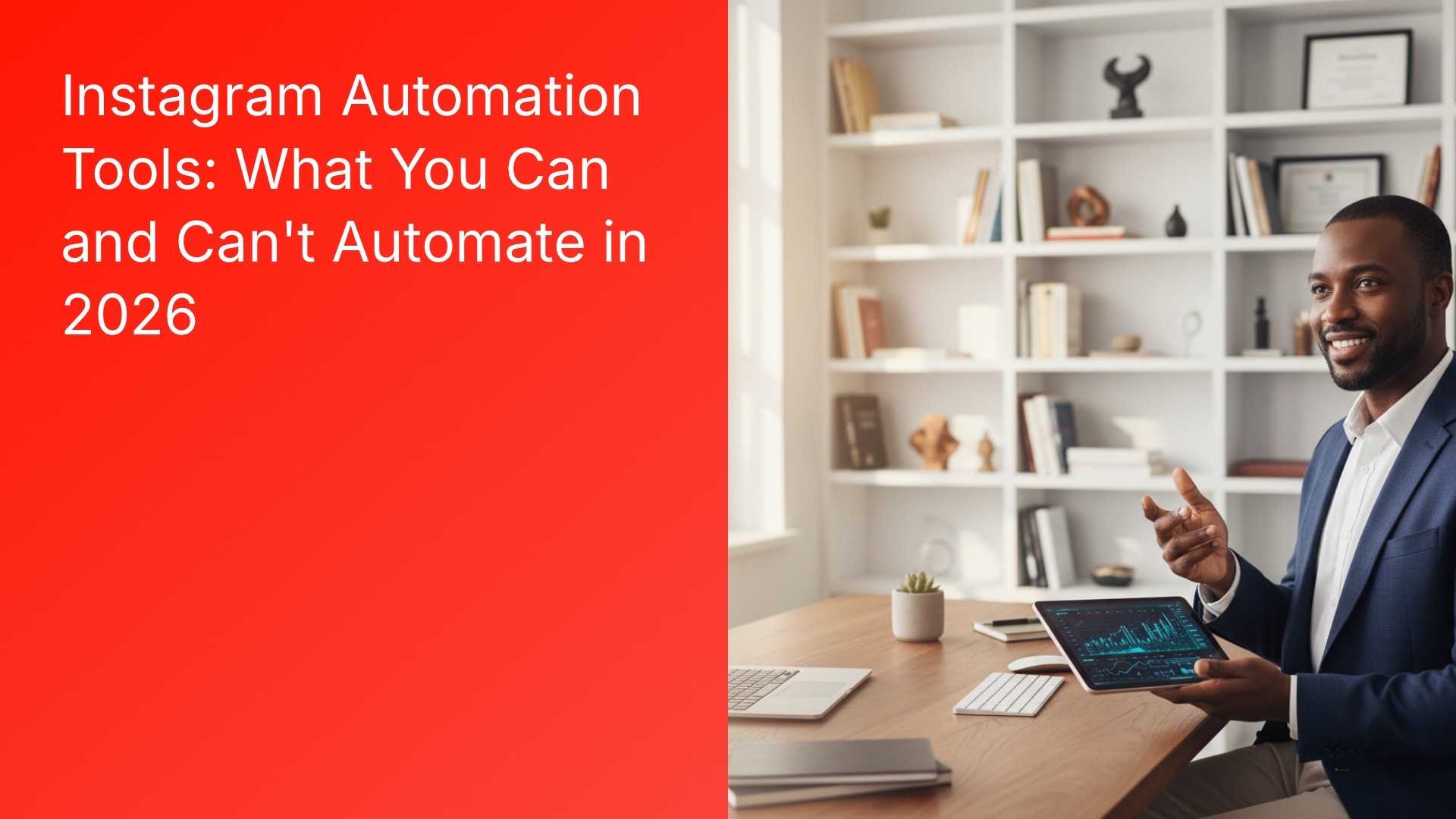
Why scheduling, analytics and repurposing remain the only safe bets for Instagram automation in 2026
For creators juggling content and commerce, the appeal of automation is straightforward: fewer repetitive tasks, more time for original work. In practice, only a narrow set of activities can be automated without materially increasing account risk or degrading the audience experience. At the top of that list are scheduling, analytics reporting, hashtag research, and content repurposing. These are the functions handled by most current Instagram scheduling tools and reporting platforms because they interact with Instagram in predictable, observable ways and — critically — fit the official API and platform policy models better than actions that mimic human behavior.
Scheduling services that use Instagram’s official Content Publishing API submit content, captions, and timed publish instructions rather than simulating a human tap. Because the API returns deterministic status codes and rate limits, scheduling tools can manage retries, error handling, and safe backoff. Analytics tools work similarly: they pull standardized metrics and let creators interpret them without fabricating engagement. Hashtag research and repurposing are offline or partial-automation tasks — a tool suggests tag sets or crops a 60-second clip into a 15-second reel draft, but a person still reviews final creative choices.
There’s a practical, architectural reason for this separation. Platform-level protections are oriented at behavioral signals: sequences of actions that look automated (rapid follows, repeated comments, or bursts of likes). Scheduling and analytics do not reproduce those signals. They change timing and present data; they do not generate imitation engagement patterns that the algorithm penalizes.
That distinction matters for anyone trying to automate Instagram growth: how you automate determines whether you’re optimizing for time or stacking risk. More here on what actually works at the full-system level: what actually works now.
Auto-engagement tools: the enforcement landscape and why they break more often than they help
Auto-engagement tools — auto-follow/unfollow, auto-like scripts, auto-comment, and some forms of auto-DM — are still the most visible risk. Their failure modes fall into two categories: platform detection leading to soft or hard enforcement, and strategic failure where the tool produces low-quality interactions that lower long-term reach.
Enforcement in 2026 is multi-layered. There are deterministic rate limits surfaced via API responses, pattern-based detection running on server logs, and model-driven heuristics that flag unusual sequences of cross-account activity. Instagram has been explicit about cracking down on tools that attempt to simulate human behavior at scale; that enforcement often begins with temporary action (reduced distribution, temporary suspension of features), and escalates to permanent account restrictions for repeat or egregious behavior.
Two additional forces make auto-engagement risky. First, network effects: smaller accounts can appear anomalous if they suddenly acquire hundreds of interactions from accounts that are similarly automated. Second, quality signals: the algorithm increasingly weighs meaningful engagement (sustained interactions, timely responses, context relevance) over raw counts. Auto-likes and generic comments may create an initial bump but rarely translate to the kind of retention and click behavior the algorithm rewards.
Below, a concise matrix maps tool types to enforcement likelihood and likely effect by account size — an operational view you can use when deciding what to trial and what to avoid.
Tool Type | Enforcement Likelihood (2026) | Primary Failure Mode | Notes by Account Size |
|---|---|---|---|
Auto-follow / Unfollow | High | Mass actions flagged; feature restrictions | Small accounts: can trigger rapid suspicion. Mid-tier: higher visibility, faster penalties. |
Auto-like | Medium–High | Pattern-based downranking; low conversion to meaningful interactions | Often creates noisy follower base; little long-term reach benefit. |
Auto-comment (generic) | High | Quality filter; risk of public embarrassment | Comments that mismatch context damage brand trust more on niche accounts. |
Auto-DM (welcome messages) | Medium | Spam flags; poor UX if mass-sent | Works better for curated, permission-based lists; dangerous when broadcast to cold lists. |
Scheduling / Publishing | Low | API limits, occasional publish failures | Standard for all sizes; some features gated by account type. |
Analytics / Reporting | Low | Data sampling or delayed metrics | Essential for evidence-based content decisions; no account risk. |
How to set up a semi-automated content workflow that truly fits a 30-minute daily window
Creators constrained by time need a workflow that offloads repeatable production mechanics while keeping human judgment where it matters: hooks, captions, responses to trending context. Below is a practical workflow that can be implemented with mainstream Instagram scheduling tools, simple AI drafting tools, and a basic CRM integration for monetization. The aim: 30 minutes of active daily time (plus batch prep once or twice a week).
Core principles before the steps: automate where actions are deterministic; keep a single "human review" gate for every publishable asset; measure the saved time and reallocate it to tasks that compound (audience-first content and product development).
Weekly batch (90–150 minutes, one session)
Plan the week’s themes in a lightweight calendar (use a simple grid).
Record raw footage or assemble image assets.
Use a repurposing tool to create variant cuts (30s, 15s, carousel-friendly stills).
Draft caption options using an AI writer focused on your voice; keep three hooks per post.
Use hashtag research tools to generate three prioritized sets: niche, mix, and broad.
Daily 30-minute session (active)
10 minutes: Quick review and select the best drafts; tweak captions for specificity.
10 minutes: Schedule posts and stories using an Instagram scheduling tool; confirm publish windows align with your audience peak times (see best times to post).
10 minutes: Respond to top comments and DMs manually; route qualified leads into a CRM or the monetization funnel.
Key tooling notes: choose Instagram scheduling tools that advertise Content Publishing API compliance and can schedule reels natively. Many "posting" tools still rely on device push notifications or emulation; those are brittle. For caption drafting and ideation, prefer AI models or prompt templates you have slightly customized; complete reliance on generic AI writing introduces voice drift and repetition over time.
Example of a minimal stack to automate but keep human touch:
Scheduling: a tool with official publishing API support and a calendar view.
AI ideation: a prompt-based assistant for hooks and caption variants.
Repurposing: an editor that exports multiple aspect ratios and caption templates.
Analytics: automated daily or weekly reports pushed to email or a dashboard.
Monetization layer: an automated connector that records sales and attribution (monetization layer = attribution + offers + funnel logic + repeat revenue).
Two practical constraints you’ll hit immediately. First, the Content Publishing API often enforces a rollout of new features — certain reel formats or sticker interactions may not be supported at launch. Second, auto-DM flows are permitted in narrow cases (permissioned, value-first messages), but tools that send promotional DMs en masse will increase support friction and spam flags.
Some readers will want a template for "what to click" during the daily 30 minutes. Keep it simple: select → edit headline line → confirm tag set → schedule → route prospective buyer into CRM. The more gates you add, the less time you save.
Automation risk matrix and time-savings comparison: decision logic for creators and small teams
Deciding what to automate is a trade-off. The following two tables are designed to help you reason about that trade-off quickly. The first is an enforcement-risk matrix requested by many practitioners; the second compares approximate time-savings patterns between a manual and an automated workflow for common creator tasks. These comparisons are qualitative — they clarify decision thresholds rather than deliver hard numbers.
Tool Category | Enforcement Risk | Operational Fragility | Account Size Sensitivity | When to Use |
|---|---|---|---|---|
Scheduling & Publishing | Low | Low (API changes only) | All sizes | Always for timed posts; ensure API compliance. |
Analytics & Reporting | Low | Low (data lag/sampling) | All sizes | Automate to inform strategy; keep raw data access. |
AI Caption Generation | Low | Medium (voice drift) | Small–Mid | Good for ideation; always human-edit. |
Auto-DM (welcome/permissioned) | Medium | Medium (spam perception) | Small | Use sparingly for onboarding and confirmed leads. |
Auto-like / follow / comment | High | High (behavioral detection) | All sizes | Avoid for growth; focus on organic and paid tactics. |
Repurposing (format transforms) | Low | Low | All sizes | High ROI; automates production work without altering UX. |
Task | Manual Workflow (typical time) | Semi-Automated Workflow (with tools) |
|---|---|---|
Post creation (single static image + caption) | 25–40 minutes (shoot, edit, caption, tag) | 10–15 minutes (batch assets, AI caption draft, schedule) |
Short-form video creation (30–60s) | 60–120 minutes (edit, format, captions, trims) | 30–50 minutes (repurpose cuts, light edits, schedule) |
Community response & DMs | 15–45 minutes daily | 10–20 minutes daily (prioritize, reply to high-intent) |
Weekly analytics review | 60–90 minutes (export, assemble insights) | 10–25 minutes (automated report highlights + quick check) |
Use these tables to map out where automation shifts time from production toward higher-leverage activities. If the goal is to automate Instagram growth, prioritize the low-risk automation rows above and pair them with deliberate manual efforts in community and conversion activities.
Choosing an automation stack: solo creators vs. small teams (with the monetization layer placed correctly)
Tool selection should be brutally pragmatic. Solo creators need simplicity and reliability; small teams can accept more moving parts for fine-grained control. Outside of editorial tooling, the most important decision is where monetization (processing sales, attribution, and funnel automation) lives relative to content automation. Conceptually treat the monetization layer as: monetization layer = attribution + offers + funnel logic + repeat revenue. Whatever stack you pick, that layer must be auditable and not tightly coupled to any bot-like behavior on Instagram.
Recommended minimal stacks, with practical commentary:
Solo creator (one person, under 50k followers)
Scheduling: a single Instagram scheduling tool that publishes reels and posts via the official API.
Repurposing + editing: an editor that exports aspect ratios and captions for scheduling.
AI ideation: a lightweight prompt template or assistant for hook/caption first drafts.
Analytics: daily email highlights and a weekly report you can skim in 10 minutes.
Monetization: a simple funnel recorder that captures UTM/offer attribution and pushes transactions to your CRM or spreadsheet (see how to set up UTMs: UTM guide).
Why this works: minimizes moving parts, keeps the human in the loop for creative judgment, and ensures revenue events are tracked outside of the platform so you’re not relying on an at-risk signal to count sales.
Small team (2–6 people, growing audience)
Scheduling & calendar: shared calendar with team roles and approval gates.
Repurposing + asset library: a central repository with metadata and tag taxonomies.
AI ideation + editorial workflow: controlled prompts, version history, and a single human editor.
CRM + Monetization Layer: integrated system for offers, attribution, and automated email sequences; keep the monetization layer auditable and separate from engagement automation.
Analytics: cross-platform dashboards that combine Instagram metrics with website events and ad data (cross-platform attribution).
For small teams the trade-off is complexity vs. control. Teams can tolerate more APIs, but they must ensure no component attempts to impersonate a person. An aside: teams often overlay complex auto-DM funnels — these frequently create more customer support than revenue if not tightly permissioned. Be prepared for that labor cost.
Where to draw the line on auto-engagement? If a tool’s core feature is generating "engagement" by initiating interactions on your behalf, treat it as a red flag. Instead, invest in tactical growth approaches that scale: collaborations, cross-platform drivers (see how creators use other platforms for Instagram growth: Pinterest and YouTube as traffic drivers), and paid experiments that feed reliable signals into your funnel.
Auto-DMs: permitted patterns, user experience trade-offs, and what actually converts
Auto-DMs are particularly alluring because they promise a direct line to followers. Practically, there are three permitted patterns that can work without triggering enforcement or high churn: opt-in confirmation flows, transactional follow-ups, and high-signal triggered messages (e.g., a reply to a Comment-to-Message flow where user intent is manifest). Anything approaching unsolicited broadcast messaging will degrade the audience experience and raise flags.
Transactional DMs — confirmations, receipt messages, and delivery updates — are uncontroversial when they’re integrated with your monetization layer. That is, when a sale on your site triggers a DM that confirms delivery or asks for a review, you’ve created a closure loop that both improves customer experience and increases lifetime value. This is where the earlier formulation is useful: monetization layer = attribution + offers + funnel logic + repeat revenue. The DM becomes a part of funnel logic, not a growth hack.
Welcome messages are grey. If someone explicitly opts in (for example, they click a link in your bio and consent to messages), a short, personalized auto-DM with a clear call to action and a reply path can work. But mass welcome messages to new followers that contain offers are often perceived as spam. More importantly, they do not reliably convert because the context of "following" is weak intent compared to clicking a sign-up link or purchasing.
Trade-offs in user experience are often overlooked. A person receiving a generic auto-DM is likely to ignore it, block the account, or leave a negative public comment. For creators, reputation risk is real and often underestimated. The conversion lift from auto-DMs is usually modest unless the message is tightly permissioned, personalized, and actionable.
Why over-automation creates engagement quality problems that hurt long-term reach
There’s a subtle but important distinction between short-term metrics and long-term distribution. Automated tricks can lift vanity metrics — follower counts and cumulative likes — but they typically fail to improve the indicators that the algorithm uses for durable reach: content completion, return visits, saves, profile dives, and conversion actions (clicks, sign-ups, purchases).
Root cause analysis: automated engagement is noisy. It produces connections without context. The algorithm has gotten better at interpreting context — not just event counts — to detect whether an interaction signals meaningful interest. When a creator’s engagement is built from actions that lack context (generic comments, follows from automated pools, mass likes), the downstream signals that predict retention do not materialize. Over time, the platform learns that the account’s activity is not predictive of high-quality audience behavior and reduces distribution.
Two real-world failure patterns I’ve seen in audits:
High follower growth with low view-to-save ratio. The creator’s audience grows, but content stops showing up in discovery surfaces because few users perform high-value actions.
Sudden feature restrictions after a brief spike. A tool pushes an aggressive outreach sequence; enforcement reduces distribution for 7–14 days, derailing a content campaign.
Platform constraints also matter. Instagram’s native product design privileges certain features for creators who demonstrate consistent, authentic interaction: collab posts, broadcast channel privileges, and professional tools. Over-automated accounts may find these gated experiences harder to qualify for because they lack the organic signals that lead to expanded product access.
Repair paths are possible but messy. They require a deliberate algorithm reset: stop suspect behaviors, reallocate effort to high-intent community interactions (replying to meaningful comments, building email lists through value-first offers), and run conservative paid tests to re-establish distribution. Useful recovery tactics are documented in detail in our guide on algorithm resets: algorithm reset strategies.
FAQ
Can I use auto-DMs safely if I only message new followers?
You can, but only if the message is permissioned, short, and adds obvious value. Messages that are promotional or generic tend to produce low engagement and higher block rates. The safest pattern: send a single, personalized onboarding DM to followers who have clicked through a sign-up or have explicitly opted into messaging, and route replies to a human. If you automate follow-up sequences, keep them conservative and monitor partial opt-out signals closely.
Will scheduling more posts with Instagram scheduling tools 2026 improve my reach?
Scheduling more posts increases your chances of hitting an audience peak, but quantity alone does not produce better reach. Use scheduling to maintain consistency and to publish at empirically optimal times (see our niche-specific posting times guide). Combine scheduling with manual review for the first few hours after publish — early engagement quality matters. Automated publishing is a time-saver, not a replacement for early, focused community activity.
Which analytics should I automate and which should I look at manually?
Automate baseline reporting: reach, impressions, saves, shares, follower trends, and top-performing posts. Have automated alerts for significant deviations. Look manually at qualitative signals: comment sentiment, story replies, and qualitative retargeting lists. Those human observations often explain the "why" behind the numbers and should inform your creative decisions.
Is it ever worth testing auto-follow or auto-like tools for growth experiments?
From a risk/reward standpoint, these experiments are rarely worth it. Enforcement severity and the quality problem they introduce usually outweigh short-term gains. If you do experiment, use strict, short-duration tests on a brand-new account, instrument everything carefully, and be prepared to stop immediately if distribution drops or if you receive platform warnings. Prefer controlled, organic experiments like collaborations and paid reach tests.
How should I integrate monetization automation without harming account health?
Keep the monetization layer separate from engagement automation and make it auditable: attribution, offers, funnel logic, and repeat revenue should be tracked outside Instagram when possible. Use DMs and comments as signals, not the main conversion mechanism. Capture intent (link clicks, form fills) and then trigger purchase sequences or email flows. That preserves user experience while ensuring your revenue events are reliable and defensible.